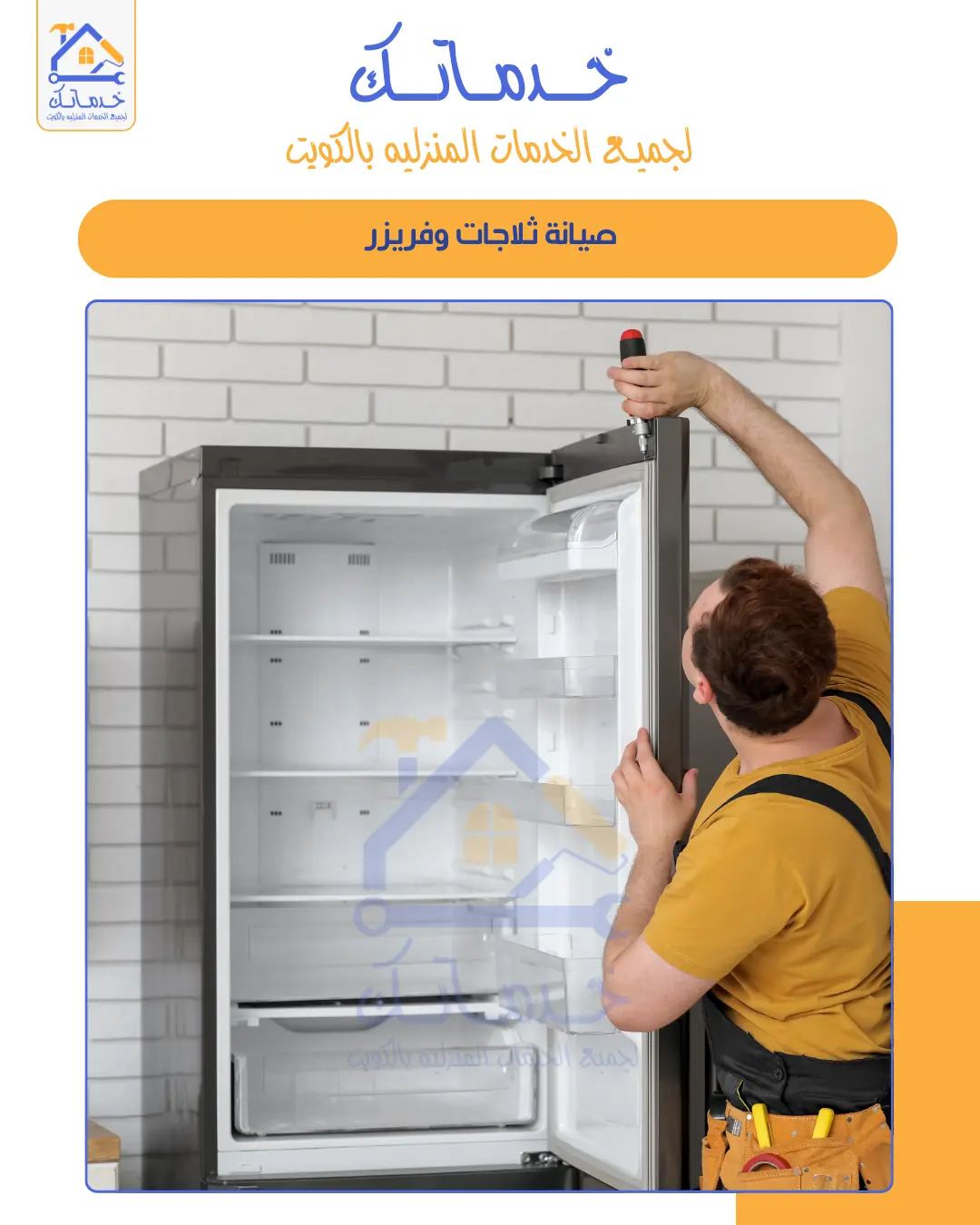
A refrigerator that fails to maintain a stable internal temperature is one of the most frustrating household appliance problems because it often develops gradually rather than appearing as a complete cooling failure. Many homeowners first notice that food spoils earlier than expected or that beverages are no longer as cold as they should be, even though the refrigerator appears to be operating normally. Extensive practical experience repairing household refrigerators throughout Kuwait has consistently demonstrated that unstable temperature is rarely caused by a single component. Instead, it usually results from problems affecting the temperature control system, electronic sensors, airflow distribution, automatic defrost operation, or the sealed refrigeration circuit. For this reason, professional engineering diagnosis always represents the first and most important step toward identifying the true source of the problem and restoring stable cooling performance without unnecessary replacement of perfectly functional components.
Why Does a Refrigerator Fail to Maintain a Stable Temperature Even Though It Appears to Be Operating Normally?
A situation where the refrigerator does not maintain a stable temperature requires comprehensive engineering diagnosis because continuous compressor operation does not necessarily mean that every cooling system is functioning correctly. Extensive practical experience repairing household refrigerators throughout Kuwait has consistently demonstrated that many refrigerators continue operating for long periods while internal temperatures repeatedly rise and fall due to faults affecting temperature control, airflow distribution, or refrigeration system performance rather than complete compressor failure. Professional technicians therefore begin by measuring temperatures at multiple locations inside both the refrigerator and freezer compartments using calibrated diagnostic instruments before comparing the recorded values with the manufacturer's engineering specifications for the exact appliance model. Compressor operating time and shutdown intervals are carefully analyzed to determine whether the refrigeration cycle remains balanced or whether the compressor operates excessively without achieving the required cabinet temperatures. Internal airflow is then evaluated by inspecting circulation fans, verifying proper air movement throughout every storage compartment, and confirming that air passages remain completely free from frost accumulation or physical obstructions caused by improperly arranged food containers. Electronic temperature sensors, thermostat operation, and the main control board are thoroughly tested because inaccurate temperature readings frequently cause incorrect operating commands that prevent stable cooling even though the refrigeration system itself remains mechanically sound. Refrigeration pressures are simultaneously measured to eliminate the possibility of refrigerant shortages, sealed system restrictions, or compressor performance issues capable of reducing cooling efficiency. Once every engineering measurement has been completed, technicians analyze all collected diagnostic data before determining the exact technical cause of the instability and selecting the appropriate repair procedure. Extensive practical experience throughout Kuwait consistently demonstrates that this systematic engineering approach prevents unnecessary replacement of healthy components, restores stable cabinet temperatures, preserves food quality, reduces electricity consumption, and returns the refrigerator to reliable long-term operation.
What Causes Refrigerator Temperature to Continuously Fluctuate and How Is the Real Cause Accurately Identified?
One of the most frequently reported complaints involves continuous refrigerator temperature fluctuations, particularly when homeowners notice that food spoils unexpectedly or that cooling performance changes noticeably from one day to another. Extensive practical experience repairing household refrigerators throughout Kuwait has consistently demonstrated that unstable temperature rarely originates from a single fault. Instead, it may result from inaccurate electronic temperature sensors, thermostat deterioration, restricted airflow, automatic defrost failures in No Frost refrigerators, reduced refrigeration system efficiency, damaged door gaskets allowing warm air infiltration, or several engineering problems occurring simultaneously. Professional technicians therefore begin by analyzing refrigerator operating behavior throughout multiple complete cooling cycles while continuously monitoring cabinet temperature changes over time rather than relying upon one isolated measurement. Every electronic temperature sensor is tested and its readings are compared directly with independently measured cabinet temperatures to verify accuracy. Compressor performance, refrigeration pressures, airflow distribution, circulation fan speed, and electronic control board commands are also carefully evaluated to ensure that every operating system responds correctly to changing thermal conditions. Condenser cleanliness, ventilation around the refrigerator, and heat dissipation efficiency are examined because excessive condenser temperature frequently reduces the refrigerator's ability to maintain consistent internal cooling. Door gaskets are inspected to verify complete sealing while the sealed refrigeration circuit undergoes pressure analysis to eliminate hidden performance losses. Rather than treating only the visible symptom, technicians identify the underlying engineering fault responsible for the repeated temperature variation before beginning repairs. Extensive practical experience throughout Kuwait consistently demonstrates that correcting the true technical cause restores stable refrigerator temperatures, protects stored food from spoilage, improves overall cooling efficiency, reduces electrical energy consumption, and significantly decreases the likelihood of recurring refrigeration problems in the future.
Why Does Food Spoil Because of Poor Refrigerator Cooling Even Though the Appliance Appears to Be Working Normally?
Many homeowners discover that food spoils because of weak refrigerator cooling even though the interior light works, the compressor starts and stops normally, and the refrigerator appears to be functioning correctly. This makes the problem considerably more difficult to identify than obvious cooling failures. Extensive practical experience repairing household refrigerators throughout Kuwait has consistently demonstrated that a refrigerator may appear perfectly normal from the outside while the actual cabinet temperature remains well above the safe range required for preserving food. This gradual increase in temperature shortens the storage life of milk, meat, vegetables, dairy products, and other perishable foods long before homeowners recognize that cooling performance has declined. Professional technicians therefore begin by measuring temperatures at multiple locations inside the refrigerator because uneven temperatures between upper and lower shelves often indicate an airflow distribution problem rather than an inability to produce cold air. Internal circulation fans are carefully inspected to verify that cold air reaches every compartment efficiently, while ventilation openings are checked to ensure they are not blocked by stored food containers or frost accumulation. In No Frost refrigerators, the automatic defrost system is thoroughly evaluated because excessive frost surrounding the evaporator significantly reduces airflow into the fresh food compartment. Diagnosis does not stop there. Electronic temperature sensors, thermostat operation, and the main control board are all tested to ensure that the refrigerator maintains the programmed temperature continuously rather than fluctuating unpredictably. Door gaskets are also inspected to eliminate warm air leakage that repeatedly raises internal cabinet temperatures. Once every engineering inspection has been completed, the refrigerator operates for several hours while technicians continuously monitor temperature stability to confirm that the underlying fault has been completely eliminated. Extensive practical experience throughout Kuwait consistently demonstrates that correcting the actual cause of weak cooling preserves food safety, reduces unnecessary food waste, prevents progressive refrigeration damage, and protects the sealed cooling system from more serious failures in the future.
How Is a Household Refrigerator Thermostat Repaired and How Does It Influence Temperature Stability?
Repairing a household refrigerator thermostat is one of the most important procedures affecting the refrigerator's ability to maintain stable internal temperatures because the thermostat controls when the cooling system starts and stops according to the required cabinet temperature. Extensive practical experience repairing household refrigerators throughout Kuwait has consistently demonstrated that many cases of unstable temperature are not caused by compressor weakness or refrigerant loss but instead result from a thermostat that has gradually lost its calibration or no longer responds accurately to changing temperatures. Professional technicians therefore begin by measuring the actual cabinet temperature before comparing those measurements with the operating values used by the thermostat itself. Mechanical thermostats are inspected by evaluating internal switching contacts, response speed, and mechanical operation, while electronically controlled thermostat systems are analyzed by monitoring communication between the thermostat and the refrigerator's electronic control board. Additional inspections ensure that external conditions such as restricted ventilation, excessive frost accumulation, or airflow problems are not creating symptoms that incorrectly suggest thermostat failure. Whenever testing confirms that the thermostat no longer operates within manufacturer specifications or responds inaccurately to temperature changes, it is replaced using a genuine original component designed specifically for the refrigerator model. After installation, refrigerator operating parameters are recalibrated before the appliance operates through several complete cooling cycles while temperatures are continuously monitored at every shelf level to verify uniform cooling performance. The interaction between the thermostat, compressor, refrigeration system, circulation fans, and electronic controls is also evaluated to ensure that every component functions together correctly. Extensive practical experience throughout Kuwait consistently demonstrates that professional thermostat repair or replacement restores stable cabinet temperatures, reduces electrical energy consumption, preserves food quality, prevents unnecessary compressor operation, extends compressor lifespan, and significantly improves overall refrigerator efficiency.
How Is the Temperature Sensor Inside a Refrigerator Tested and Why Can Sensor Failure Cause Constant Temperature Fluctuations?
Testing the temperature sensor inside a refrigerator is one of the most critical stages of diagnosing modern refrigerators because most current models no longer rely solely on a traditional mechanical thermostat. Instead, they use electronic temperature sensors that continuously send temperature readings to the main control board, allowing the refrigerator to determine exactly when the compressor should start or stop, how the circulation fans should operate, and how cooling should be distributed throughout the appliance. Extensive practical experience repairing household refrigerators throughout Kuwait has consistently demonstrated that many faults initially believed to involve compressor failure or refrigerant shortages are actually caused by inaccurate temperature sensor readings. A defective sensor may report temperatures that are either higher or lower than the actual cabinet temperature, causing the control board to make incorrect operating decisions by stopping cooling too early or continuing compressor operation longer than necessary. Professional technicians therefore begin by measuring the true cabinet temperature using calibrated precision instruments before comparing those readings with the temperature values transmitted by the electronic sensor. The sensor's electrical resistance is then measured at several controlled temperature levels and compared with the manufacturer's engineering specifications because every sensor follows a precise resistance curve that must remain within approved tolerances. Wiring harnesses, electrical connectors, and communication circuits are also carefully inspected to eliminate broken wires, oxidation, loose terminals, or poor electrical connections capable of interfering with signal transmission. Diagnosis does not stop at the sensor itself because technicians also evaluate the electronic control board to verify that incoming sensor information is correctly interpreted and processed without software or electronic communication faults. Whenever testing confirms that the sensor no longer operates within factory specifications, it is replaced using a genuine original component before the refrigerator undergoes several complete operating cycles while technicians monitor temperature stability throughout every compartment. Extensive practical experience throughout Kuwait consistently demonstrates that professional temperature sensor diagnosis prevents unnecessary compressor replacement, eliminates needless refrigerant charging, restores highly accurate temperature control, preserves food quality, reduces electricity consumption, and significantly improves long-term refrigerator reliability.
How Should Refrigerator Temperature Be Properly Adjusted to Achieve the Best Cooling Performance?
Many homeowners believe that properly adjusting refrigerator temperature simply involves turning a control dial or selecting a different digital temperature setting. However, extensive practical experience repairing household refrigerators throughout Kuwait has consistently demonstrated that achieving optimal refrigerator performance requires much more than changing a numerical setting. Professional technicians first verify that every refrigeration system operates correctly because adjusting temperature settings alone cannot solve problems caused by defective sensors, automatic defrost failures, airflow restrictions, refrigeration system faults, or electronic control issues. Once proper system operation has been confirmed, temperature settings are adjusted according to the refrigerator manufacturer's recommendations while taking into consideration daily household usage, door opening frequency, surrounding ambient temperature, and the demanding operating conditions created by Kuwait's hot climate. Homeowners are also advised to arrange stored food in ways that allow unrestricted cold air circulation throughout every shelf because overcrowding ventilation outlets prevents uniform cooling even when temperature settings are correct. Door gaskets are carefully inspected to ensure complete sealing because continuous warm air infiltration forces the refrigeration system to alter normal operating cycles and compromises temperature stability. Technicians also recommend maintaining sufficient clearance around the refrigerator to improve condenser ventilation while cleaning condenser coils regularly to maximize heat dissipation efficiency. Once all operating conditions have been optimized, cabinet temperatures are monitored throughout complete refrigeration cycles to confirm that temperatures remain stable within the manufacturer's recommended range and that significant temperature differences no longer exist between individual shelves. Extensive practical experience throughout Kuwait consistently demonstrates that correctly adjusting refrigerator temperature while ensuring proper operation of every supporting refrigeration system not only improves food preservation but also reduces electricity consumption, minimizes compressor workload, stabilizes overall cooling performance, and significantly extends the operational lifespan of the refrigerator.
How Can Internal Refrigerator Temperature Fluctuations Be Permanently Corrected Rather Than Temporarily Reduced?
Correcting internal refrigerator temperature fluctuations requires a complete understanding of how every cooling system inside the appliance works together because unstable temperatures are rarely caused by a single defective component. Extensive practical experience repairing household refrigerators throughout Kuwait has consistently demonstrated that some refrigerators develop significant temperature differences between upper and lower shelves, while others experience sudden increases in cabinet temperature followed by temporary recovery even though the compressor continues operating. These conditions often lead to food spoilage despite the refrigerator appearing to function normally. Professional technicians therefore begin by measuring temperatures at multiple locations throughout the refrigerator during several complete operating cycles before evaluating internal airflow distribution, circulation fan efficiency, automatic defrost performance, and possible frost accumulation surrounding the evaporator that may restrict cold air movement. Electronic temperature sensors, thermostat operation, and the main control board are carefully analyzed while refrigeration system pressures and compressor performance are simultaneously evaluated because faults affecting any of these systems can contribute to unstable cabinet temperatures. Door gaskets are thoroughly inspected to eliminate warm air leakage, while food storage arrangement is also reviewed because blocking ventilation openings prevents cold air from circulating evenly throughout the refrigerator. Once the true engineering cause has been identified, technicians correct every contributing fault during the same repair procedure instead of addressing only the visible symptom. After repairs have been completed, the refrigerator operates continuously for several hours while cabinet temperatures are monitored to verify long-term stability rather than temporary improvement. Extensive practical experience throughout Kuwait consistently demonstrates that comprehensive correction of internal temperature fluctuations restores stable cooling performance, protects stored food, reduces electricity consumption, minimizes compressor workload, and prevents the same problem from returning during extended daily operation.
What Factors Determine the Cost of Repairing Refrigerator Temperature Problems in Kuwait and Why Does the Price Differ Between Refrigerators?
Many homeowners immediately ask about the cost of repairing refrigerator temperature problems in Kuwait after noticing unstable cooling performance. However, extensive practical experience repairing household refrigerators throughout Kuwait has consistently demonstrated that repair costs should never be determined by visible symptoms alone because identical temperature problems frequently originate from completely different technical faults. Some refrigerators require nothing more than recalibrating electronic controls or replacing a temperature sensor, while others require repairs involving the automatic defrost system, thermostat replacement, electronic control board servicing, airflow restoration, or sealed refrigeration system repairs. Professional technicians therefore begin every repair with a comprehensive engineering diagnosis that includes cabinet temperature measurements, refrigeration pressure analysis, electronic sensor testing, thermostat evaluation, circulation fan inspection, electronic control diagnostics, and complete compressor performance analysis before estimating repair costs. Refrigerator brand, manufacturing year, availability of genuine replacement parts, engineering design complexity, and accessibility of internal components also influence the final repair price because some refrigerator models require specialized diagnostic equipment and considerably more labor to reach defective components. Whenever replacement parts become necessary, technicians provide homeowners with a detailed explanation of every available repair option together with the cost associated with each solution and its expected long-term reliability, allowing customers to make informed technical and financial decisions. After repairs have been completed, the refrigerator undergoes complete operational testing to verify stable temperatures, balanced cooling performance, and proper operation of every refrigeration system before being returned to service. Extensive practical experience throughout Kuwait consistently demonstrates that calculating repair costs only after professional engineering diagnosis provides homeowners with accurate, transparent pricing based upon the refrigerator's actual technical condition while preventing unnecessary repair expenses and ensuring that the correct fault is repaired during the first service visit.
How Does Maintaining the Refrigerator Cooling Control System Help Preserve Stable Internal Temperatures?
Maintaining the refrigerator cooling control system is one of the most important preventive maintenance procedures because this system functions as the central control unit responsible for managing every refrigeration process inside the appliance. It continuously receives information from temperature sensors, determines compressor operating periods, controls circulation fan operation, and manages automatic defrost cycles in modern refrigerator models. Extensive practical experience repairing household refrigerators throughout Kuwait has consistently demonstrated that many cases of unstable refrigerator temperature are not caused by failures within the sealed refrigeration system itself but instead result from faults affecting the electronic cooling control system or communication failures between its various components. Professional technicians therefore begin by evaluating the electronic control board using specialized diagnostic equipment before testing every connected temperature sensor to verify that all incoming temperature information accurately reflects actual cabinet conditions. Compressor operating commands, circulation fan control signals, and cooling cycle timing are carefully analyzed and compared with manufacturer engineering specifications to ensure proper system coordination. Electrical wiring, electronic circuits, communication pathways, and connector integrity are also inspected to eliminate increased electrical resistance, oxidation, or poor connections capable of affecting signal accuracy. In inverter-equipped refrigerator models, technicians additionally evaluate the inverter control module responsible for regulating compressor speed according to changing cooling demands. Once maintenance has been completed, the refrigerator operates through multiple complete refrigeration cycles while cabinet temperatures, electrical energy consumption, and system response to changing thermal conditions are continuously monitored to verify precise electronic control. Extensive practical experience throughout Kuwait consistently demonstrates that regular maintenance of the refrigerator cooling control system significantly reduces recurring technical faults, improves food preservation, lowers compressor workload, reduces electricity consumption, and substantially extends the operational lifespan of every major refrigerator component.
How Can the Problem of Unstable Refrigerator Cooling Be Permanently Solved Instead of Temporarily Masked?
Solving the problem of unstable refrigerator cooling requires identifying and correcting the true engineering cause rather than simply eliminating the visible symptom for a short period of time. Extensive practical experience repairing household refrigerators throughout Kuwait has consistently demonstrated that stable cooling depends upon the perfect balance between compressor performance, sealed refrigeration system efficiency, electronic temperature sensors, thermostat operation, airflow circulation, automatic defrost performance, and the refrigerator's electronic control system. A malfunction affecting any one of these systems can easily cause repeated temperature fluctuations even though the remaining components continue operating. Professional technicians therefore begin by measuring actual cabinet temperatures throughout every refrigerator compartment before analyzing refrigeration system pressures, evaluating compressor efficiency, testing electronic sensors, inspecting thermostat operation, examining the electronic control board, and verifying that circulation fans distribute cold air evenly throughout the appliance. Door gaskets are carefully inspected to eliminate warm air leakage, condenser coils are cleaned when necessary, airflow passages are checked for frost accumulation or physical obstructions, and the automatic defrost system is thoroughly evaluated to ensure unrestricted air circulation. Whenever diagnosis reveals multiple contributing faults, technicians repair every identified problem during the same service visit rather than correcting only the most obvious symptom because leaving secondary faults unresolved frequently causes temperature instability to return shortly after the repair has been completed. Once every repair has been finished, the refrigerator operates continuously for several hours while technicians monitor cabinet temperatures, compressor operation, refrigeration pressures, electrical consumption, and complete cooling performance to verify that the appliance has returned to stable factory operating conditions. Extensive practical experience throughout Kuwait consistently demonstrates that comprehensive engineering diagnosis followed by complete system repair restores long-term cooling stability, protects stored food, prevents recurring refrigerator failures, minimizes future maintenance costs, and significantly extends the service life of the entire appliance.
Conclusion
An unstable refrigerator temperature may initially appear to be a relatively minor inconvenience, but it can quickly affect food safety, refrigerator efficiency, electrical energy consumption, and the long-term reliability of the entire appliance if left unresolved. Extensive practical experience repairing household refrigerators throughout Kuwait has consistently demonstrated that successful repair depends upon identifying the true engineering cause of the problem through comprehensive diagnosis rather than replacing components randomly or attempting to correct only the visible symptom.
Throughout this comprehensive guide, we explained why a refrigerator fails to maintain a stable temperature, analyzed the causes of continuous refrigerator temperature fluctuations, described why food spoils because of weak refrigerator cooling, explained professional procedures for repairing a household refrigerator thermostat, demonstrated the importance of testing refrigerator temperature sensors, discussed how to properly adjust refrigerator temperature, explained methods for correcting internal refrigerator temperature fluctuations, analyzed the factors influencing the cost of repairing refrigerator temperature problems in Kuwait, demonstrated the importance of maintaining the refrigerator cooling control system, and finally presented the correct engineering approach for permanently solving unstable refrigerator cooling problems instead of applying temporary solutions that allow the fault to return.
Ultimately, choosing an experienced refrigerator technician equipped with advanced diagnostic instruments and extensive engineering knowledge ensures that the real source of the malfunction is accurately identified and professionally repaired during the first service visit. Proper diagnosis restores stable cooling performance, preserves food quality, extends refrigerator lifespan, reduces electricity consumption, minimizes future repair expenses, and provides reliable long-term operation.
Frequently Asked Questions
Why does my refrigerator fail to maintain a constant temperature?
The problem may be caused by faulty temperature sensors, thermostat failure, electronic control board issues, airflow restrictions, automatic defrost problems, or refrigeration system faults.
Can unstable temperature cause food to spoil?
Yes. Temperatures that rise above the recommended food preservation range significantly reduce storage life and increase the risk of food spoilage.
How can I tell whether the refrigerator temperature sensor has failed?
Professional technicians verify sensor condition by measuring its electrical resistance and comparing its readings with actual cabinet temperatures using calibrated diagnostic equipment.
Can a refrigerator thermostat be repaired instead of replaced?
That depends on the diagnostic results. Some thermostat problems can be repaired, while others require replacement with a genuine manufacturer-approved component.
Will adjusting the refrigerator temperature setting solve the problem?
Not necessarily. If the underlying fault involves the refrigeration system, airflow, electronic controls, or sensors, changing the temperature setting alone will not permanently correct the problem.
Why are temperatures different on various refrigerator shelves?
Uneven temperatures may result from restricted airflow, blocked ventilation passages, frost accumulation, overloaded shelves, or poor internal air circulation.
What determines the cost of repairing refrigerator temperature problems?
Repair cost depends on the actual technical cause, refrigerator model, required replacement parts, engineering complexity, and the labor necessary to complete the repair.
Does the electronic cooling control system affect temperature stability?
Yes. The control system manages compressor operation, circulation fans, temperature sensors, and cooling cycles, making it essential for maintaining stable refrigerator temperatures.
Can the compressor be perfectly healthy while temperatures still fluctuate?
Yes. Many temperature instability problems originate from sensors, thermostats, electronic controls, airflow restrictions, or automatic defrost faults rather than compressor failure.
When should I contact a professional refrigerator technician?
You should request professional diagnosis whenever temperature fluctuations continue, food spoils repeatedly, cooling becomes inconsistent despite normal refrigerator operation, or stable temperatures cannot be maintained, because early diagnosis prevents more serious failures and reduces long-term repair costs