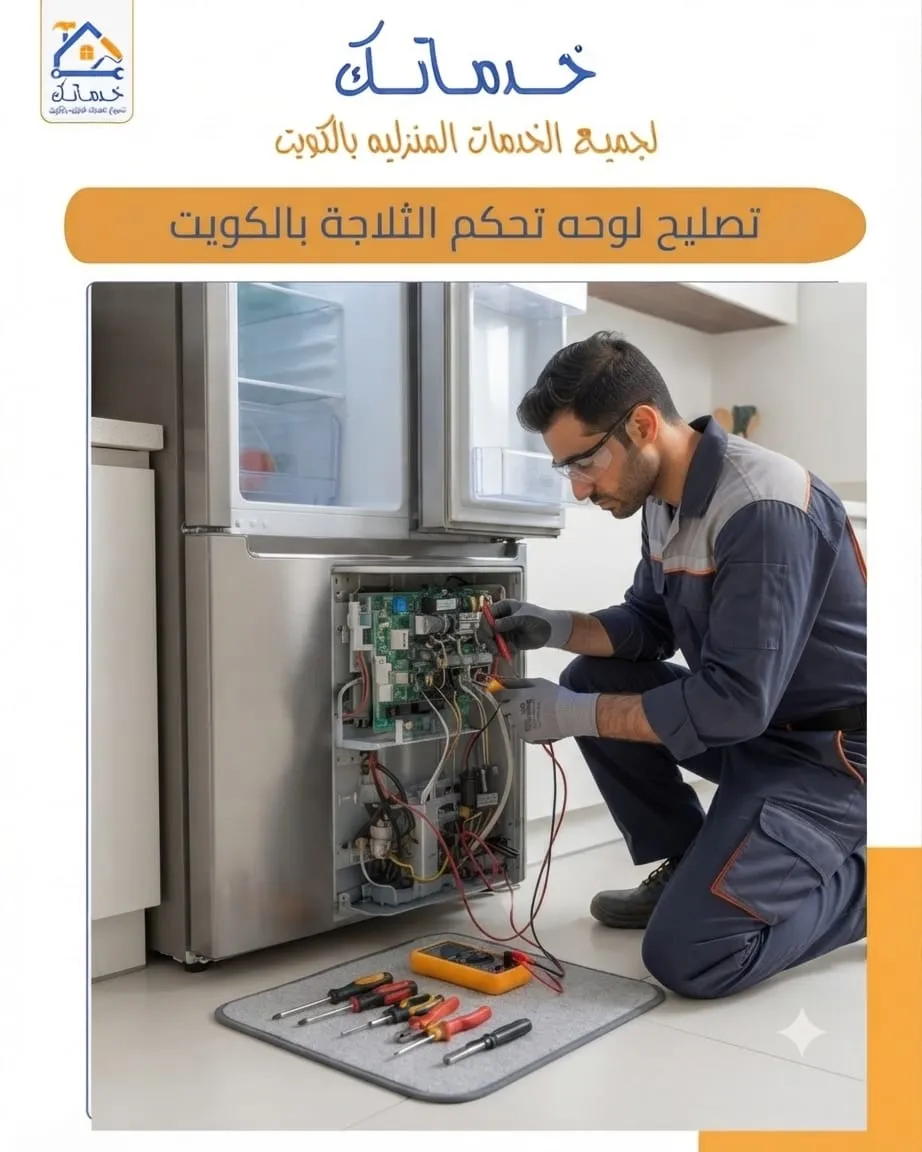
No Frost refrigerators have become the preferred choice for most homes in Kuwait because they provide stable cooling performance without requiring manual ice removal. However, when these refrigerators begin losing cooling efficiency or ice starts accumulating inside the appliance, many homeowners immediately assume that the compressor has failed or that the refrigerator has lost refrigerant. Extensive practical experience repairing No Frost refrigerators throughout Kuwait has consistently demonstrated that most of these problems are actually related to the automatic defrost system, internal airflow management, or electronic control components responsible for regulating the cooling cycle. Professional diagnosis therefore focuses on analyzing every operating system inside the refrigerator rather than concentrating only on the visible symptom. This engineering approach identifies the true cause of the malfunction, prevents unnecessary replacement of perfectly functional components, restores factory cooling performance, and ensures long-term reliability after the repair has been completed.
Why Does a No Frost Refrigerator Stop Cooling Properly Even Though the Compressor Continues Running?
A situation where a No Frost refrigerator does not cool properly is one of the most common service requests, yet it is also one of the faults that requires the most comprehensive engineering diagnosis because continuous compressor operation does not necessarily mean that the refrigeration system is functioning correctly. Extensive practical experience servicing No Frost refrigerators throughout Kuwait has consistently demonstrated that many refrigerators continue operating for long periods while cooling performance gradually declines because of failures affecting airflow distribution, automatic defrost operation, or electronic temperature management rather than the compressor itself. Professional technicians therefore begin by measuring the actual temperatures inside both the refrigerator and freezer compartments before comparing these measurements with the information received by the refrigerator's electronic temperature sensors. Compressor operating time and shutdown intervals are carefully analyzed to determine whether the refrigeration system is cycling normally or operating continuously while consuming excessive electrical energy without producing sufficient cooling. The evaporator and all internal circulation fans are then inspected to verify that cold air reaches every storage compartment correctly. The complete automatic defrost system is thoroughly tested to ensure that accumulated frost is not restricting airflow around the evaporator. Refrigeration pressures are measured using professional diagnostic equipment capable of detecting refrigerant shortages, partial capillary restrictions, filter blockages, or sealed system inefficiencies that gradually reduce cooling capacity without immediately stopping refrigerator operation. Electronic control boards, temperature sensors, and intelligent control systems are evaluated simultaneously because inaccurate temperature readings may cause the refrigerator to operate incorrectly even when every mechanical refrigeration component remains fully functional. After completing every engineering measurement, technicians analyze all collected data before selecting the appropriate repair procedure. Extensive practical experience throughout Kuwait consistently demonstrates that comprehensive diagnosis saves considerable repair costs, prevents unnecessary replacement of healthy components, restores factory cooling performance, and returns No Frost refrigerators to stable long-term operation.
Why Does Ice Accumulate Inside a No Frost Refrigerator Even Though It Is Designed to Prevent Frost Formation?
Many homeowners ask about the cause of ice accumulation inside a No Frost refrigerator because the primary purpose of this refrigeration technology is to eliminate manual defrosting by automatically removing frost before it becomes visible. Consequently, the appearance of heavy ice accumulation almost always indicates that one or more components responsible for automatic defrost operation or internal airflow management are no longer functioning correctly. Extensive practical experience repairing No Frost refrigerators throughout Kuwait has consistently demonstrated that frost accumulation frequently results from a failed defrost heater, defective defrost sensor, damaged thermal fuse, or electronic control board malfunction that prevents automatic defrost cycles from starting at the correct intervals. Damaged door gaskets may also allow excessive humid air to enter the refrigerator continuously, increasing frost formation beyond the capacity of the automatic defrost system. Professional technicians therefore begin by removing the evaporator cover and carefully studying the distribution pattern of accumulated frost because the shape and location of the ice provide valuable engineering evidence regarding the underlying fault. The defrost heater is tested using professional resistance and electrical continuity measurements while the defrost sensor and thermal fuse undergo comprehensive performance evaluation to verify proper operation within manufacturer specifications. Electronic control systems are then monitored during complete automatic defrost cycles to ensure that every command is executed at the correct operating time. Internal circulation fans are also inspected because heavy frost accumulation frequently blocks airflow passages, dramatically reducing cooling efficiency despite a healthy refrigeration circuit. After identifying the true engineering cause, technicians complete the appropriate repair before operating the refrigerator through several complete cooling and automatic defrost cycles to verify that frost no longer accumulates and that the entire system has returned to normal factory operation. Extensive practical experience throughout Kuwait consistently demonstrates that correcting frost accumulation during its earliest stages preserves cooling efficiency, reduces electricity consumption, protects compressor lifespan, and prevents more serious refrigeration failures from developing later.
How Is a Refrigerator Defrost System Fault Professionally Repaired Without Affecting the Remaining Cooling Components?
Repairing a refrigerator defrost system fault is one of the most technically demanding maintenance procedures performed on No Frost refrigerators because the automatic defrost system directly influences cooling efficiency, internal airflow, compressor workload, and overall energy consumption. Extensive practical experience repairing No Frost refrigerators throughout Kuwait has consistently demonstrated that many technicians immediately replace the defrost heater whenever heavy frost appears on the evaporator, even though the actual failure may originate from the defrost sensor, thermal fuse, electronic control board, or another related component. Professional technicians therefore never replace parts based solely on visible frost accumulation. Instead, they begin by monitoring an entire automatic defrost cycle to determine whether the refrigerator initiates defrost operation at the correct interval or fails to activate the cycle altogether. The electrical resistance of the defrost heater is measured precisely before the thermal fuse undergoes complete continuity testing to verify uninterrupted electrical flow. The defrost sensor is then evaluated under multiple temperature conditions, and its readings are compared with the actual evaporator temperature to determine whether it continues transmitting accurate information to the electronic control board. Control board commands are analyzed simultaneously to verify that every electrical signal reaches the defrost heater and associated components exactly when required by the refrigerator's operating program. The evaporator itself is also carefully inspected to ensure that frost accumulation results from automatic defrost failure rather than refrigeration system inefficiency or refrigerant loss. Whenever diagnostic testing identifies multiple contributing faults, every defective component is repaired during the same service visit to eliminate the possibility of recurring frost accumulation after maintenance has been completed. Following repair, the refrigerator operates through several complete refrigeration and automatic defrost cycles while technicians continuously monitor temperatures, airflow distribution, compressor operation, and defrost performance to verify complete restoration of factory operating conditions. Extensive practical experience throughout Kuwait consistently demonstrates that scientifically diagnosing and repairing the automatic defrost system preserves cooling efficiency, eliminates recurring frost buildup, protects compressor longevity, and significantly extends the overall service life of No Frost refrigerators.
When Does a Refrigerator Defrost Heater Need Replacement and How Is Heater Failure Confirmed?
The appearance of frost on the evaporator does not automatically mean that replacing the refrigerator defrost heater is necessary because the heater represents only one component within a complete automatic defrost system. Extensive practical experience repairing No Frost refrigerators throughout Kuwait has consistently demonstrated that replacing the heater without comprehensive diagnostic testing frequently fails to solve the original problem because the true fault may actually involve the defrost sensor, thermal fuse, electronic controller, or associated electrical circuits. Professional technicians therefore begin by measuring the electrical resistance of the heater and comparing the results with the manufacturer's engineering specifications for the exact refrigerator model. Electrical supply to the heater is then tested during an active automatic defrost cycle to verify that the electronic control board and thermal protection components deliver power correctly. The physical condition of the heater is also carefully inspected for visible signs of overheating, structural deterioration, mechanical damage, or insulation failure capable of reducing its heating efficiency or preventing uniform frost removal across the evaporator surface. Only after every engineering measurement confirms that the heater itself no longer operates within manufacturer specifications is replacement performed using an original-specification component fully compatible with the refrigerator's model and design. During installation, technicians ensure precise positioning of the new heater around the evaporator so that heat distribution remains even throughout every automatic defrost cycle. Once installation has been completed, the complete automatic defrost system undergoes extensive testing rather than evaluating the heater alone. The defrost sensor, thermal fuse, electronic control board, evaporator drainage system, and complete frost removal process are all monitored while the refrigerator operates through several automatic defrost cycles. Water drainage following ice melting is also verified to prevent future drainage problems or secondary frost formation. Extensive practical experience throughout Kuwait consistently demonstrates that replacing a defrost heater only after confirming genuine heater failure preserves the integrity of the complete automatic defrost system, prevents unnecessary repair expenses, minimizes recurring faults, and allows No Frost refrigerators to maintain stable long-term cooling performance.
Why Is Testing the Defrost Sensor in No Frost Refrigerators Essential Before Replacing Any Component?
Testing the defrost sensor in No Frost refrigerators is one of the most critical stages of professional diagnosis because this sensor continuously monitors the evaporator temperature and sends precise information to the electronic control board, allowing the refrigerator to determine exactly when automatic defrost cycles should begin and end. Extensive practical experience repairing No Frost refrigerators throughout Kuwait has consistently demonstrated that many faults initially diagnosed as failed defrost heaters or defective control boards are actually caused by inaccurate temperature readings produced by a malfunctioning defrost sensor. Professional technicians therefore begin by measuring the electrical resistance of the sensor under several controlled temperature conditions before comparing every reading with the manufacturer's engineering specifications for the exact refrigerator model. Even small deviations from the expected resistance values may cause the electronic controller to delay, shorten, or completely cancel automatic defrost cycles, eventually allowing heavy frost accumulation to develop on the evaporator. The sensor's electrical wiring and connectors are also carefully inspected to ensure that broken wires, loose terminals, oxidation, or poor electrical contact are not interfering with communication between the sensor and the control board. The electronic controller itself is then evaluated to verify that it correctly receives and processes every temperature signal transmitted by the sensor because communication failures may originate within the control board rather than the sensor. Finally, technicians monitor several complete operating cycles to confirm that automatic defrost begins and ends exactly when required according to the actual evaporator temperature. Whenever testing confirms that the sensor no longer performs within factory specifications, it is replaced with an original-specification component before the complete refrigeration system undergoes final calibration and operational testing. Extensive practical experience throughout Kuwait consistently demonstrates that carefully testing the defrost sensor before replacing any other component significantly improves diagnostic accuracy, prevents unnecessary replacement of healthy parts, restores reliable automatic defrost operation, and preserves the long-term efficiency and stability of No Frost refrigeration systems.
Why Does a No Frost Refrigerator Continuously Start and Stop, and How Does This Affect Compressor Lifespan?
A situation where a No Frost refrigerator repeatedly starts and stops is one of the strongest indicators that the refrigeration system is no longer operating in proper balance because under normal conditions compressors should follow carefully controlled operating cycles that maintain stable temperatures while minimizing electrical energy consumption. Extensive practical experience repairing No Frost refrigerators throughout Kuwait has consistently demonstrated that excessive compressor cycling may result from inaccurate temperature sensors, restricted airflow, automatic defrost failures, partial refrigeration system inefficiencies, electronic control problems, or damaged door gaskets allowing warm air to enter continuously. Professional technicians therefore begin by analyzing compressor operating periods and shutdown intervals using specialized diagnostic instruments before comparing these measurements with actual cabinet temperatures inside both the refrigerator and freezer compartments. Internal circulation fans are thoroughly inspected to verify proper airflow throughout every storage area, while the automatic defrost system is evaluated to ensure that frost accumulation is not restricting air movement around the evaporator. Refrigeration system pressures are measured simultaneously to detect refrigerant shortages, partial capillary tube restrictions, or sealed system inefficiencies capable of forcing the compressor to work much harder than intended. Door gaskets receive careful inspection because warm air infiltration frequently causes unnecessary compressor operation as the refrigerator repeatedly attempts to restore the desired temperature. Electronic control boards and temperature sensors are also evaluated to verify that compressor commands accurately reflect actual cooling requirements rather than incorrect sensor information. After identifying the true engineering cause of excessive compressor cycling, technicians complete the appropriate repair before monitoring the refrigerator through several extended operating cycles to confirm restoration of stable compressor operation, balanced cooling performance, and consistent energy consumption. Extensive practical experience throughout Kuwait consistently demonstrates that correcting frequent compressor cycling at an early stage protects compressor lifespan, lowers electricity consumption, improves overall refrigeration efficiency, prevents secondary mechanical failures, and significantly extends the service life of the entire No Frost refrigerator.
How Is Restricted Airflow Inside a No Frost Refrigerator Corrected and Why Does It Directly Affect Cooling Performance?
Correcting restricted airflow inside a refrigerator is one of the most important maintenance procedures performed on No Frost refrigeration systems because these refrigerators rely entirely on continuous circulation of cold air to distribute cooling evenly between the freezer and fresh food compartments. Extensive practical experience repairing No Frost refrigerators throughout Kuwait has consistently demonstrated that many homeowners mistakenly assume poor cooling performance is caused by refrigerant loss, while the actual problem often involves restricted airflow resulting from frost accumulation or blocked air passages. Professional technicians therefore begin by inspecting the complete airflow pathway, starting from the evaporator fan and continuing through every air duct responsible for distributing cooled air throughout the refrigerator cabinet. Food containers and storage arrangements are also evaluated to ensure they are not unintentionally obstructing air circulation. The evaporator cover is then removed so accumulated frost can be examined because heavy ice buildup frequently narrows or completely blocks airflow channels even while the compressor continues operating normally. Internal circulation fans are tested for rotational speed, electrical current consumption, bearing condition, and airflow capacity to verify that they continue performing according to manufacturer specifications. The automatic defrost system is simultaneously inspected because recurring frost accumulation usually indicates an underlying defrost failure rather than an airflow problem alone. Air ducts are thoroughly cleaned to remove dust, debris, or foreign materials capable of reducing airflow efficiency, while electronically controlled air dampers used in modern refrigerator models are tested to ensure proper opening and closing during different operating conditions. Once every maintenance procedure has been completed, technicians operate the refrigerator through several complete cooling cycles while measuring temperatures at multiple locations throughout both compartments to confirm uniform cold air distribution. Extensive practical experience throughout Kuwait consistently demonstrates that professionally restoring unrestricted airflow returns cooling efficiency to factory performance, reduces compressor operating time, preserves food quality, improves energy efficiency, and prevents recurring cooling problems caused by inadequate air circulation.
What Factors Determine the Cost of No Frost Refrigerator Repair in Kuwait?
When homeowners ask about the cost of No Frost refrigerator repair in Kuwait, many expect a fixed repair price regardless of the nature of the malfunction. However, extensive practical experience servicing No Frost refrigerators throughout Kuwait has consistently demonstrated that repair costs depend entirely upon the engineering cause of the fault, the condition of affected components, and the complexity of the required repair procedure. Some refrigerator faults require only cleaning of the automatic defrost system or recalibration of electronic sensors, while others involve replacing the defrost heater, temperature sensors, electronic control board, refrigeration system components, or repairing sealed cooling circuits. Professional technicians therefore never estimate repair costs solely from a customer's description of the symptoms. Instead, they perform a comprehensive engineering diagnosis that includes temperature measurements, compressor performance evaluation, automatic defrost testing, airflow analysis, electronic sensor inspection, control board diagnostics, and refrigeration pressure measurements to verify whether refrigerant shortages or internal restrictions are affecting cooling performance. Additional factors influencing repair costs include refrigerator brand, manufacturing year, availability of original replacement parts, accessibility of internal components, and the amount of labor required to complete repairs safely according to manufacturer specifications. Whenever diagnosis reveals multiple technically acceptable repair options, technicians explain every available solution together with its expected reliability, long-term performance, future maintenance implications, and overall cost so homeowners can make informed decisions based upon accurate engineering information rather than assumptions. After repairs have been completed, the refrigerator undergoes complete operational verification to confirm successful restoration of cooling performance and elimination of every identified technical fault. Extensive practical experience throughout Kuwait consistently demonstrates that comprehensive diagnosis before determining repair costs prevents unnecessary expenses, ensures accurate first-time repairs, eliminates repeated service visits, and provides homeowners with complete confidence regarding the condition of their No Frost refrigerator before maintenance begins.
How Does Professional Maintenance of the Automatic Defrost System Preserve Long-Term No Frost Refrigerator Performance?
Maintaining the automatic defrost system in refrigerators is one of the most valuable preventive maintenance procedures for No Frost refrigerators because the entire cooling system depends on the automatic removal of frost from the evaporator at carefully controlled intervals. This process allows cold air to circulate freely throughout both the freezer and fresh food compartments without manual intervention. Extensive practical experience repairing No Frost refrigerators throughout Kuwait has consistently demonstrated that many major refrigerator failures begin with relatively small defects inside the automatic defrost system, such as reduced defrost heater efficiency, inaccurate defrost sensor readings, delayed electronic control commands, or gradual deterioration of protective components. These problems often remain unnoticed by homeowners during their early stages but eventually lead to heavy frost accumulation, reduced cooling performance, increased electricity consumption, and excessive compressor workload. Professional maintenance therefore begins with a complete engineering evaluation of every component responsible for automatic defrost operation. The defrost heater is tested for proper electrical resistance and heating capacity, the defrost sensor is evaluated under multiple temperature conditions, the thermal fuse is inspected for electrical continuity, and the electronic control board is analyzed to verify that every automatic defrost cycle begins and ends precisely according to manufacturer specifications. The evaporator is carefully examined to ensure frost melts evenly across its entire surface while the drainage system responsible for carrying melted water away from the evaporator is inspected for restrictions or blockages that could cause water to refreeze inside the refrigerator. Internal circulation fans are also evaluated after each automatic defrost cycle because unrestricted airflow is essential for restoring normal cooling performance immediately after frost removal has been completed. Once every maintenance procedure has been finished, the refrigerator operates through multiple complete refrigeration and automatic defrost cycles while technicians continuously monitor cabinet temperatures, airflow stability, compressor operation, electronic control behavior, and complete defrost performance. Extensive practical experience throughout Kuwait consistently demonstrates that regular professional maintenance of the automatic defrost system greatly reduces unexpected refrigerator failures, preserves stable cooling temperatures, lowers electricity consumption, protects compressor longevity, and significantly extends the operational life of No Frost refrigeration systems.
How Can Poor Cooling Performance in a No Frost Refrigerator Be Permanently Solved Instead of Temporarily Improved?
Solving poor cooling performance in No Frost refrigerators requires a comprehensive engineering diagnosis covering every system responsible for producing, distributing, and regulating refrigeration because insufficient cooling frequently results from several technical faults occurring simultaneously rather than from a single defective component. Extensive practical experience servicing No Frost refrigerators throughout Kuwait has consistently demonstrated that while some refrigerators suffer from sealed refrigeration system problems, others lose cooling efficiency because of automatic defrost failures, restricted airflow, weakened circulation fans, inaccurate electronic sensors, or improperly functioning control boards. Professional technicians therefore begin by measuring temperatures at multiple locations throughout both refrigerator compartments before analyzing compressor operation, refrigeration system pressures, evaporator performance, condenser efficiency, and complete airflow distribution. Every electronic sensor and the main control board are evaluated to ensure that operating commands correspond accurately with actual cabinet temperatures rather than inaccurate electronic readings. Door gaskets are inspected carefully because warm air infiltration continuously increases cooling demand while circulation fans and electronically controlled air dampers are tested to verify that cold air reaches every storage compartment evenly. Whenever diagnosis reveals multiple contributing faults, every engineering problem is corrected during the same repair procedure rather than addressing only the most obvious symptom, since correcting a single fault often allows additional hidden problems to remain unresolved and eventually produce recurring cooling failures. Following completion of repairs, the refrigerator operates continuously while technicians monitor cabinet temperatures, compressor cycling, electrical energy consumption, airflow distribution, automatic defrost performance, and complete refrigeration stability to verify full restoration of factory operating conditions. Homeowners also receive practical recommendations including maintaining adequate ventilation around the refrigerator, avoiding placement of hot food directly inside the cabinet, cleaning the condenser periodically, and arranging stored food in ways that preserve unrestricted airflow throughout the refrigerator. Extensive practical experience throughout Kuwait consistently demonstrates that comprehensive engineering diagnosis combined with complete correction of every contributing fault provides permanent cooling restoration, preserves original factory performance, minimizes recurring technical failures, reduces future repair costs, and allows No Frost refrigerators to continue operating efficiently and reliably for many years.
Conclusion
No Frost refrigerators represent one of the most advanced refrigeration technologies available in modern homes throughout Kuwait, but their long-term performance depends entirely upon the proper interaction of every internal operating system, including the refrigeration circuit, automatic defrost system, electronic temperature controls, airflow management components, and intelligent control electronics. Consequently, even a relatively minor fault affecting one of these systems may eventually reduce cooling efficiency, increase frost accumulation, raise electricity consumption, overload the compressor, and shorten the appliance's operational lifespan. Extensive practical experience repairing No Frost refrigerators throughout Kuwait has consistently demonstrated that engineering diagnosis based upon accurate technical measurements saves homeowners considerable time and repair expenses compared with repairs based on assumptions or unnecessary replacement of functional components.
Throughout this comprehensive guide, we explained why a No Frost refrigerator may stop cooling properly, examined the causes of frost accumulation inside No Frost refrigerators, described professional procedures for repairing refrigerator defrost system faults, explained when defrost heater replacement becomes genuinely necessary, demonstrated the importance of testing the defrost sensor, analyzed why No Frost refrigerators repeatedly start and stop, described methods for correcting restricted internal airflow, explained the engineering factors affecting No Frost refrigerator repair costs in Kuwait, highlighted the importance of professional automatic defrost system maintenance, and finally presented a complete engineering methodology for permanently solving poor cooling performance in No Frost refrigerators.
Ultimately, choosing an experienced refrigerator technician equipped with advanced diagnostic instruments and specialized knowledge of No Frost technology remains the most effective way to preserve refrigerator efficiency because accurate diagnosis not only restores proper cooling performance but also protects compressor lifespan, reduces electricity consumption, prevents recurring technical failures, and significantly extends the refrigerator's overall service life.
Frequently Asked Questions
Why does my No Frost refrigerator stop cooling even though the compressor continues running?
The most common causes include automatic defrost system failures, restricted airflow, faulty circulation fans, inaccurate temperature sensors, or electronic control problems rather than compressor failure itself.
Is frost accumulation inside a No Frost refrigerator considered normal?
No. A No Frost refrigerator is specifically designed to remove frost automatically, so visible ice accumulation usually indicates a malfunction within the automatic defrost system or one of its related components.
How can I determine whether the defrost heater has failed?
Professional technicians confirm heater failure by measuring electrical resistance, verifying power supply during automatic defrost cycles, and testing overall heater performance using specialized diagnostic equipment.
Can a faulty defrost sensor reduce refrigerator cooling performance?
Yes. Because the defrost sensor controls the timing of automatic defrost cycles, inaccurate sensor readings directly affect frost removal, airflow, and overall cooling efficiency.
Why does my No Frost refrigerator repeatedly start and stop?
Frequent compressor cycling may result from faulty sensors, automatic defrost problems, restricted airflow, refrigeration system inefficiency, damaged door gaskets, or electronic control faults.
Can blocked airflow reduce refrigerator cooling even when the refrigeration system is healthy?
Yes. Restricted airflow prevents cold air from reaching every storage compartment, causing poor cooling despite normal compressor operation.
What determines the repair cost of a No Frost refrigerator?
Repair costs depend on the engineering cause of the malfunction, refrigerator model, condition of the automatic defrost system, required replacement parts, refrigeration system condition, and overall repair complexity.
Do No Frost refrigerators require regular preventive maintenance?
Yes. Periodic inspection of the automatic defrost system, condenser cleaning, airflow verification, and electronic system testing significantly reduce unexpected failures and preserve long-term refrigerator performance.
Can ignoring automatic defrost faults eventually damage the compressor?
Yes. Heavy frost accumulation and restricted airflow force the compressor to operate much longer than intended, increasing mechanical stress and reducing compressor lifespan.
When should I contact a professional refrigerator technician?
Professional service should be requested whenever cooling performance declines, frost accumulates inside the refrigerator, compressor cycling becomes abnormal, electricity consumption increases noticeably, or any symptoms indicate faults within the automatic defrost or airflow management systems.