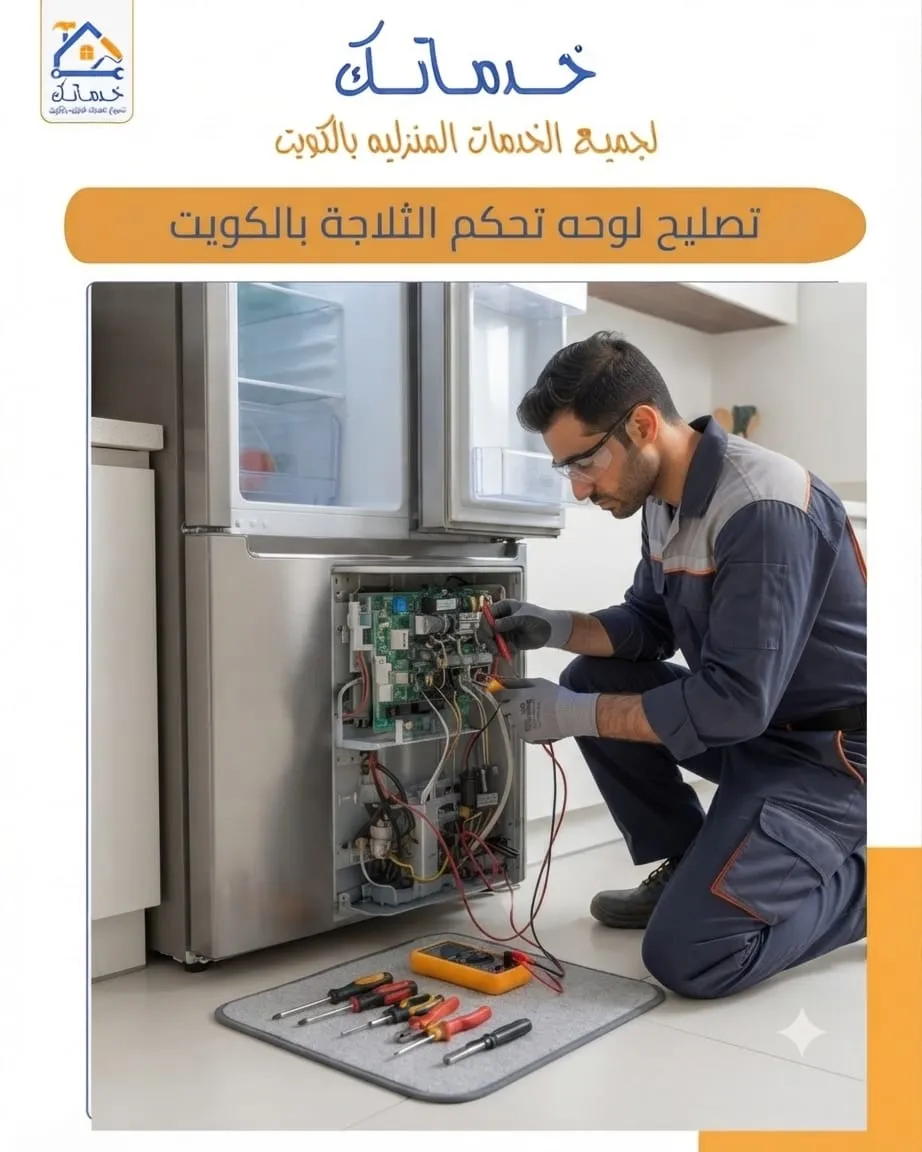
Water leaking from a refrigerator is one of the most frustrating household appliance problems because it creates inconvenience far beyond the appliance itself. Water collecting on kitchen floors can damage flooring materials, increase indoor humidity, create unpleasant odors, and even become a slipping hazard if the problem continues unnoticed. Many homeowners immediately assume that leaking water means the refrigeration system has failed or that refrigerant is escaping from the appliance. However, extensive practical experience servicing household refrigerators throughout Kuwait has consistently demonstrated that most water leaks are actually caused by drainage system faults, blocked defrost drains, excessive frost accumulation, improper refrigerator installation, or moisture management problems rather than failures within the refrigeration circuit itself. For this reason, professional diagnosis always focuses on tracing the complete path followed by defrost water from the evaporator to the drain pan before any repair begins. Identifying the true source of the leak prevents unnecessary repairs, restores proper drainage, eliminates recurring water accumulation, and allows the refrigerator to continue operating efficiently for many years.
Why Does Water Leak from a Refrigerator Inside the House Even When the Cooling System Operates Normally?
Many homeowners believe that water leaking from a refrigerator inside the house automatically indicates refrigerant leakage or a major refrigeration system failure. Extensive practical experience repairing household refrigerators throughout Kuwait has consistently demonstrated that this assumption is rarely correct. In the vast majority of cases, water leakage occurs while the refrigeration system continues cooling perfectly because the actual problem develops within the defrost water drainage system rather than the sealed refrigeration circuit itself. Professional technicians therefore do not begin by inspecting the compressor or refrigerant lines. Instead, they carefully trace the complete journey followed by defrost water from the evaporator during the automatic defrost cycle until it reaches the external drain pan located beneath or behind the refrigerator. Every stage of this drainage process is examined individually. The drain opening is inspected for partial or complete blockage, the drain tube is checked for restrictions, bends, disconnections, or internal contamination, and the drain pan is evaluated to confirm that it remains correctly positioned and capable of collecting water efficiently. Technicians also evaluate the quantity of water produced during each automatic defrost cycle because excessive water production may indicate abnormal defrost operation or electronic control issues rather than drainage failure alone. Door gaskets receive equal attention because damaged seals allow warm, humid air to enter the refrigerator continuously, increasing condensation and producing significantly larger volumes of water than the drainage system was designed to handle. Cabinet leveling is another essential part of the diagnostic procedure because even slight installation errors may redirect water away from the drain opening, allowing it to accumulate inside the fresh food compartment before eventually leaking onto the kitchen floor. After every engineering measurement has been completed, technicians observe multiple operating cycles to confirm that water follows its intended drainage path without interruption. Extensive practical experience throughout Kuwait consistently demonstrates that tracing the complete drainage system rather than focusing solely on the visible leak produces faster diagnosis, eliminates unnecessary repairs, permanently resolves recurring water leakage, and preserves the long-term reliability of the refrigerator.
Why Is Water Collecting Beneath the Refrigerator Drawers an Early Warning Sign of Drainage Problems?
Water collecting beneath the refrigerator drawers is one of the earliest warning signs that the refrigerator's drainage system is no longer operating correctly. Recognizing this symptom early provides homeowners with an excellent opportunity to correct the underlying problem before water begins leaking onto kitchen floors or causing moisture damage inside the appliance. Extensive practical experience servicing household refrigerators throughout Kuwait has consistently demonstrated that water never accumulates beneath refrigerator drawers without a technical reason. Instead, it indicates that defrost water is no longer reaching the drain opening correctly after melting from the evaporator during automatic defrost cycles. Professional technicians therefore begin diagnosis by carefully examining the exact location and pattern of water accumulation rather than immediately cleaning the drain opening. The distribution of water inside the fresh food compartment often reveals valuable engineering information about the direction in which water is traveling after leaving the evaporator. The evaporator itself is thoroughly inspected to determine whether excessive frost accumulation is redirecting melting water away from its designed drainage path. The complete automatic defrost system—including the defrost heater, temperature sensor, thermal protection devices, and electronic control board—is then evaluated to verify that defrost cycles occur at the proper intervals and produce the correct amount of meltwater. The drain opening, drain tube, and external drain pan are inspected together because each component depends on the others for proper operation. Refrigerator usage habits are also considered during diagnosis because frequent door openings, placing uncovered food inside the cabinet, or storing hot food immediately after cooking significantly increase internal humidity and consequently increase the amount of condensation and defrost water generated during normal operation. Cabinet ventilation, condenser airflow, and installation conditions are equally important because excessive heat around the refrigerator may reduce evaporation efficiency within the external drain pan. After completing every diagnostic procedure, technicians identify the true engineering cause of water accumulation before performing only the repairs actually required. Extensive practical experience throughout Kuwait consistently demonstrates that treating water beneath refrigerator drawers as an early warning sign prevents larger drainage failures, reduces repair costs, protects kitchen flooring, and preserves the refrigerator's overall operating efficiency.
How Is the Refrigerator Drain Opening Properly Cleaned to Prevent Future Blockages?
Cleaning the refrigerator drain opening involves much more than simply removing the visible debris around the drain entrance because successful maintenance depends on restoring the entire drainage pathway that carries defrost water from the evaporator to the external drain pan beneath the refrigerator. Extensive practical experience repairing household refrigerators throughout Kuwait has consistently demonstrated that many home cleaning attempts temporarily reopen the drain entrance while leaving hidden deposits inside the drain tube untouched. As a result, the refrigerator may operate normally for a short period before the blockage develops again. Professional technicians therefore begin by disconnecting the refrigerator from the electrical supply before carefully accessing the drain opening according to the manufacturer's service procedures for the specific refrigerator model. Any accumulated frost surrounding the drain entrance is completely melted before cleaning begins because forcing tools through frozen drainage passages may damage surrounding plastic components. Specialized non-destructive cleaning equipment is then used to remove food particles, biological deposits, grease residues, mineral buildup, and organic contamination without scratching or enlarging the drain channel itself. After the visible blockage has been removed, technicians verify unrestricted water flow by introducing measured quantities of clean water into the drainage system while observing whether the water reaches the external drain pan smoothly without hesitation or backflow. The drain tube is inspected along its entire length to ensure that no internal restrictions, bends, partial blockages, or accumulated residues remain hidden inside the system. The external drain pan also receives thorough cleaning because accumulated dirt, dust, grease, and mineral deposits may interfere with normal evaporation after water reaches the bottom of the refrigerator. The complete automatic defrost system is then evaluated to confirm that the amount of water produced during each defrost cycle remains within normal operating limits because excessive defrost water production may indicate unrelated control system faults requiring additional repairs. After every cleaning procedure has been completed, the refrigerator operates through multiple complete cooling and defrost cycles while technicians monitor water movement from the evaporator to the drain pan without interruption. Extensive practical experience throughout Kuwait consistently demonstrates that professional drain opening cleaning restores reliable drainage, prevents recurring blockages, reduces unpleasant odors, eliminates standing water inside the cabinet, and significantly improves the long-term reliability of the refrigerator's moisture management system.
Why Does the Refrigerator Drain Become Blocked and What Is the Best Permanent Solution?
A blocked refrigerator drain is one of the most common drainage system failures encountered during household refrigerator servicing, yet blockages rarely develop suddenly. Extensive practical experience repairing household refrigerators throughout Kuwait has consistently demonstrated that drain restrictions usually form gradually as tiny food particles, organic residues, grease deposits, dust, mineral contamination, and biological material accumulate inside the drainage system over many months or years of operation. High internal humidity, frequent door openings, uncovered food storage, and irregular refrigerator cleaning all accelerate the formation of these deposits by increasing the amount of moisture passing through the drainage system during every automatic defrost cycle. Professional technicians therefore never limit their inspection to the visible drain opening because the actual blockage may exist deep inside the drain tube or at the connection leading into the external drain pan. The complete drainage pathway is evaluated using professional testing methods that verify unrestricted water flow throughout the entire system, allowing technicians to identify even partial restrictions before they become complete blockages. The automatic defrost system is inspected simultaneously because excessive water production resulting from abnormal defrost operation may overwhelm an otherwise functional drainage system. Refrigerator installation conditions are also evaluated because poor ventilation behind the appliance may reduce evaporation efficiency inside the external drain pan, allowing water to accumulate faster than it can evaporate. Whenever internal contamination is discovered within the drainage system, technicians use specialized cleaning equipment capable of removing every deposit throughout the full length of the drain channel without damaging plastic tubing or surrounding components. Following completion of the cleaning process, the refrigerator operates through multiple automatic defrost cycles while technicians carefully monitor water movement from the evaporator to the drain pan, confirming that drainage remains smooth, unrestricted, and completely stable under normal operating conditions. Extensive practical experience throughout Kuwait consistently demonstrates that treating the complete drainage system rather than cleaning only the visible drain opening permanently eliminates recurring blockages, restores proper moisture management, protects internal refrigerator components from water damage, and greatly reduces the likelihood of future household water leaks.
Why Does the Refrigerator Continuously Leak Water from the Bottom Even Though It Appears to Be Working Properly?
A situation where the refrigerator continuously leaks water from the bottom often causes homeowners to suspect a serious refrigeration failure, especially when water repeatedly appears on the kitchen floor while the refrigerator continues cooling food normally. Extensive practical experience repairing household refrigerators throughout Kuwait has consistently demonstrated that continuous water leakage from beneath the refrigerator rarely indicates a failure within the sealed refrigeration system. Instead, the problem usually develops because water produced during automatic defrost cycles is no longer reaching the external drain pan through its intended drainage path. Professional technicians therefore begin by tracing the complete movement of water from the evaporator through the drain opening, down the drain tube, and finally into the drain pan where it should naturally evaporate. Every component within this pathway is carefully inspected. The drain opening is examined for hidden frost accumulation, partial obstructions, or contamination. The drain tube is checked for kinks, internal restrictions, disconnections, improper routing, or physical damage that may redirect water before it reaches the drain pan. The drain pan itself is inspected for cracks, improper positioning, excessive contamination, or displacement caused by previous appliance movement. The automatic defrost system is then evaluated because excessive ice melting during abnormal defrost cycles may generate more water than the drainage system can safely manage. Refrigerator cabinet leveling is also verified using precision measuring equipment because even slight forward or sideways tilting may redirect water away from the drain opening and toward the bottom of the cabinet instead. Door gaskets receive careful inspection since warm air infiltration significantly increases condensation, producing larger quantities of defrost water during every operating cycle. After completing every engineering inspection, technicians operate the refrigerator through multiple complete cooling and defrost cycles while continuously observing water movement throughout the drainage system. Extensive practical experience throughout Kuwait consistently demonstrates that identifying the precise interruption within the drainage pathway permanently eliminates continuous bottom water leakage, protects flooring from moisture damage, restores proper drainage performance, and prevents recurring household water leaks.
How Is a Refrigerator Drain Hose Professionally Repaired While Preserving Long-Term Drainage Efficiency?
Repairing a refrigerator drain hose requires much more than reconnecting or replacing a damaged tube because the hose forms one of the most critical components responsible for transporting defrost water safely from the refrigerator interior to the external evaporation tray. Extensive practical experience servicing household refrigerators throughout Kuwait has consistently demonstrated that drain hoses gradually develop problems including internal contamination, partial blockages, sharp bends caused by appliance movement, age-related cracking, material deterioration, or accidental disconnection during transportation or previous repair work. Professional technicians therefore begin by inspecting the complete length of the drain hose from its connection beneath the evaporator to its outlet inside the drain pan. Water flow testing is performed to determine whether the hose allows unrestricted drainage throughout its entire length. When internal contamination is identified, technicians remove accumulated biological deposits, grease residues, mineral buildup, and organic material using specialized cleaning equipment designed specifically for refrigerator drainage systems without damaging the hose itself. If physical deterioration such as cracking, splitting, deformation, or structural weakness is discovered, the damaged hose is replaced with a manufacturer-approved component matching the original specifications for diameter, flexibility, heat resistance, and long-term durability. During installation, technicians ensure that the replacement hose follows the correct routing path without excessive bending, twisting, compression, or contact with moving mechanical components that might eventually damage it again. Secure connections are established at both the drain outlet and the external drain pan to eliminate any possibility of future leakage. After installation has been completed, the refrigerator operates through complete automatic defrost cycles while technicians continuously monitor water flow from the evaporator through the drain hose into the drain pan, confirming unrestricted drainage and complete system stability. Extensive practical experience throughout Kuwait consistently demonstrates that professionally repairing or replacing the refrigerator drain hose restores dependable drainage performance, eliminates household water leakage, protects surrounding kitchen surfaces, and preserves the long-term reliability of the refrigerator's complete moisture management system.
How Is Water Leakage Inside the Refrigerator Permanently Eliminated Without Affecting Cooling Performance?
Eliminating water leakage inside the refrigerator requires a complete understanding of how the automatic defrost system and the drainage system operate together because water accumulating inside the fresh food compartment is rarely an isolated fault. Instead, it usually indicates that one or more components responsible for collecting, directing, or draining defrost water are no longer functioning correctly. Extensive practical experience repairing household refrigerators throughout Kuwait has consistently demonstrated that many recurring water leakage complaints return shortly after temporary repairs because only the visible water was removed while the actual engineering cause remained unresolved. Professional technicians therefore begin by evaluating the complete automatic defrost cycle while carefully monitoring the quantity of water produced during ice melting and observing the exact route followed by the water as it leaves the evaporator. The evaporator is inspected for excessive frost accumulation because heavy ice formation frequently redirects melting water away from the drain opening. The defrost heater, temperature sensor, thermal fuse, electronic control board, and every component responsible for regulating the automatic defrost cycle are thoroughly tested to verify that ice melts evenly and only during the correct operating intervals. Door gaskets are also carefully inspected because continuous warm air infiltration significantly increases internal humidity, producing excessive frost accumulation that eventually overloads the drainage system. Internal airflow patterns receive additional attention because improperly arranged food containers may restrict air circulation and increase localized condensation inside the refrigerator compartment. After completing every diagnostic procedure, technicians perform only the repairs required by the engineering evidence, whether that involves restoring the automatic defrost system, cleaning the drainage pathway, replacing defective components, or correcting installation conditions. The refrigerator is then operated through multiple complete refrigeration and defrost cycles while technicians continuously monitor internal temperatures, drainage performance, water movement, and overall operating stability. Extensive practical experience throughout Kuwait consistently demonstrates that comprehensive repair of internal refrigerator water leakage permanently eliminates recurring moisture accumulation, preserves cooling efficiency, protects stored food, and restores long-term drainage reliability without compromising refrigeration performance.
What Factors Determine the Cost of Refrigerator Water Leak Repair in Kuwait?
When homeowners ask about the cost of refrigerator water leak repair in Kuwait, many expect a standard service price regardless of the cause of the leakage. However, extensive practical experience servicing household refrigerators throughout Kuwait has consistently demonstrated that repair costs are determined entirely by the underlying engineering fault rather than by the amount of visible water. Some refrigerators require only professional drain cleaning or removal of a minor blockage, while others may need repairs to the automatic defrost system, replacement of the drain hose, installation of a new drain pan, or correction of electronic control failures affecting moisture management. Professional technicians therefore never provide accurate repair estimates before completing a comprehensive technical diagnosis. Every inspection begins with detailed evaluation of the drain opening, drain tube, drain pan, automatic defrost system, door gaskets, refrigerator leveling, and complete drainage pathway while the refrigerator operates through a full cooling and defrost cycle. Additional factors influencing repair costs include the refrigerator manufacturer, cabinet capacity, appliance age, accessibility of internal components, availability of genuine replacement parts, and the overall complexity of the required repair procedure. Whenever multiple technically acceptable repair options exist, technicians explain the advantages, expected service life, future maintenance implications, and long-term reliability associated with each solution, allowing homeowners to make informed decisions based upon accurate engineering information rather than assumptions. Once repairs have been completed, the drainage system undergoes complete operational testing to verify unrestricted water flow, stable refrigeration performance, and elimination of all leakage before the appliance is returned to normal service. Extensive practical experience throughout Kuwait consistently demonstrates that investing in accurate diagnosis before determining repair costs prevents unnecessary expenses, eliminates repeated service visits, ensures that only defective components receive attention, and provides homeowners with the most effective long-term solution for refrigerator water leakage.
How Is the Exact Cause of Refrigerator Water Leakage Identified Before Any Repair Begins?
Identifying the exact cause of water leaking from a refrigerator is the foundation of every successful repair because leaking water is not a fault by itself but rather the visible result of a problem affecting the refrigerator's moisture management, automatic defrost, or drainage system. Extensive practical experience repairing household refrigerators throughout Kuwait has consistently demonstrated that many unsuccessful repair attempts occur because technicians begin cleaning the drain or replacing components before determining the true engineering cause of the leakage. Professional diagnosis therefore follows a structured process that begins before any part of the refrigerator is disassembled. Technicians first gather detailed information about the behavior of the leak, including when water appears, whether it occurs immediately after an automatic defrost cycle, during continuous compressor operation, after prolonged door opening, or only at certain times of the day. These observations provide valuable engineering clues that significantly narrow the diagnostic process. The refrigerator is then operated under normal conditions while temperatures inside both the fresh food compartment and freezer are carefully monitored to verify that the refrigeration system itself continues operating within manufacturer specifications. During the automatic defrost cycle, technicians observe the complete melting process, following every stage of water movement from the evaporator toward the drain opening while checking whether accumulated frost, partial restrictions, or internal ice formations redirect water away from its intended path. Modern electronically controlled refrigerators receive additional diagnostic testing of temperature sensors, electronic control boards, timing sequences, and defrost programming because certain electronic failures may produce excessive meltwater or extend the defrost cycle beyond normal operating limits. The drain pan, drain hose, connecting joints, and surrounding cabinet structure are also inspected for hairline cracks, loose fittings, hidden damage, or installation defects that may only become visible while water actively flows through the system. After every engineering measurement has been completed, technicians analyze all collected information together before determining the exact source of the leak and selecting the appropriate repair procedure. Extensive practical experience throughout Kuwait consistently demonstrates that this comprehensive diagnostic methodology reduces repair time, eliminates unnecessary replacement of functional components, permanently resolves recurring water leakage, and restores reliable refrigerator operation during the first maintenance visit.
How Does Professional Drainage System Maintenance Prevent Future Refrigerator Water Leaks?
Professional maintenance of refrigerator drainage system faults extends far beyond simply clearing a blocked drain because the primary objective is to restore every drainage component to its original operating condition while eliminating every condition capable of producing future water leaks. Extensive practical experience servicing household refrigerators throughout Kuwait has consistently demonstrated that many recurring leakage complaints develop because only the visible drain blockage was removed while the remaining drainage components were never inspected or serviced. Professional maintenance therefore begins with a complete engineering evaluation of the entire drainage system, including the drain opening, drain tube, external drain pan, evaporator, automatic defrost system, and every component responsible for directing defrost water safely out of the refrigerator cabinet. The drainage pathway is thoroughly cleaned using specialized equipment designed to remove organic deposits, mineral buildup, grease residues, biological contamination, and hidden debris without damaging plastic drainage channels. The drain hose is then inspected for internal restrictions, structural deterioration, sharp bends, improper routing, or connection problems that may reduce long-term drainage efficiency. The automatic defrost system—including the heater, temperature sensor, thermal fuse, and electronic controller—is carefully tested because consistent defrost operation remains essential for maintaining predictable water flow throughout the drainage system. Door gaskets receive equal attention because continuous warm air infiltration increases internal humidity, generating excessive frost accumulation and placing unnecessary stress on the drainage pathway during every defrost cycle. Cabinet leveling and installation conditions are also verified to ensure that gravity directs water naturally toward the drain opening while adequate ventilation around the refrigerator allows collected water inside the drain pan to evaporate efficiently. Following completion of every maintenance procedure, the refrigerator operates through multiple complete cooling and automatic defrost cycles while technicians continuously monitor water movement from the evaporator to the drain pan, confirming uninterrupted drainage and complete elimination of leakage. Homeowners also receive practical maintenance recommendations including periodic cleaning, proper food storage practices, maintaining unobstructed airflow, avoiding placement of hot food inside the refrigerator, and regularly inspecting the drain opening. Extensive practical experience throughout Kuwait consistently demonstrates that comprehensive drainage system maintenance not only eliminates current water leakage but also preserves refrigerator efficiency, protects internal components, prevents recurring drainage failures, reduces future repair costs, and significantly extends the appliance's overall service life.
Conclusion
Water leaking from a refrigerator should never be ignored, even when only a small amount of water is visible, because continuous leakage may eventually damage flooring, increase indoor humidity, create unpleasant odors, encourage mold growth, and indicate an underlying technical fault that may become more serious if left unresolved. Extensive practical experience servicing household refrigerators throughout Kuwait has consistently demonstrated that successful repairs depend upon identifying the true engineering cause of the leak rather than simply removing the visible water or cleaning one isolated part of the drainage system.
Throughout this comprehensive guide, we explained the engineering causes of water leaking from a refrigerator inside the house, analyzed why water collects beneath refrigerator drawers, described the correct procedure for cleaning the refrigerator drain opening, examined the causes of blocked household refrigerator drains, explained why the refrigerator continuously leaks water from the bottom, demonstrated the professional procedure for repairing refrigerator drain hoses, discussed comprehensive methods for eliminating internal refrigerator water leakage, examined the factors affecting the cost of refrigerator water leak repair in Kuwait, explained how technicians identify the exact cause of refrigerator water leakage, and finally demonstrated the importance of professional maintenance of refrigerator drainage system faults in preventing future leakage while preserving long-term appliance performance.
Ultimately, accurate engineering diagnosis followed by professional maintenance restores the drainage system to its original operating condition, maintains efficient cooling performance, prevents recurring water leaks, minimizes future repair costs, protects household flooring from moisture damage, and allows the refrigerator to continue operating safely, efficiently, and reliably for many years.
Frequently Asked Questions
Why does my refrigerator leak water even though it cools normally?
In most cases, the leak is caused by drainage system problems, blocked drain passages, or automatic defrost faults rather than failures within the refrigeration system itself.
Does water collecting beneath the drawers indicate a serious refrigerator failure?
Not necessarily. It is usually an early indication that the drainage system requires inspection before water begins leaking outside the refrigerator.
How can I tell if the refrigerator drain opening is blocked?
The most common signs include water collecting inside the refrigerator, beneath the vegetable drawers, or repeatedly leaking onto the kitchen floor.
Can a damaged refrigerator drain hose be repaired?
If the problem is caused by contamination or blockage, professional cleaning may restore proper operation. However, cracked, deteriorated, or damaged drain hoses should normally be replaced.
Why does the refrigerator continue leaking after the drain opening has been cleaned?
Because the actual fault may involve the drain hose, automatic defrost system, electronic controls, or another component beyond the drain opening itself.
Can water leakage reduce refrigerator cooling performance?
Indirectly, yes. Excessive frost accumulation, airflow restriction, or automatic defrost system failures associated with water leakage may eventually reduce refrigeration efficiency.
What determines the cost of refrigerator water leak repair?
Repair costs depend on the technical cause of the leak, refrigerator model, drainage system condition, required replacement parts, diagnostic findings, and overall repair complexity.
Does the refrigerator drainage system require periodic maintenance?
Yes. Regular inspection and cleaning of the drainage system significantly reduce the likelihood of future blockages, internal water accumulation, and household water leakage.
When should I contact a professional refrigerator technician?
Professional service is recommended whenever water leakage continues after basic cleaning, repeatedly returns, appears inside the refrigerator, or causes water to collect beneath the appliance.
Can professional diagnosis prevent the problem from returning?
Yes. Comprehensive engineering diagnosis identifies and corrects the true cause of the leakage rather than treating only the visible symptoms, providing a long-term and reliable repair solution