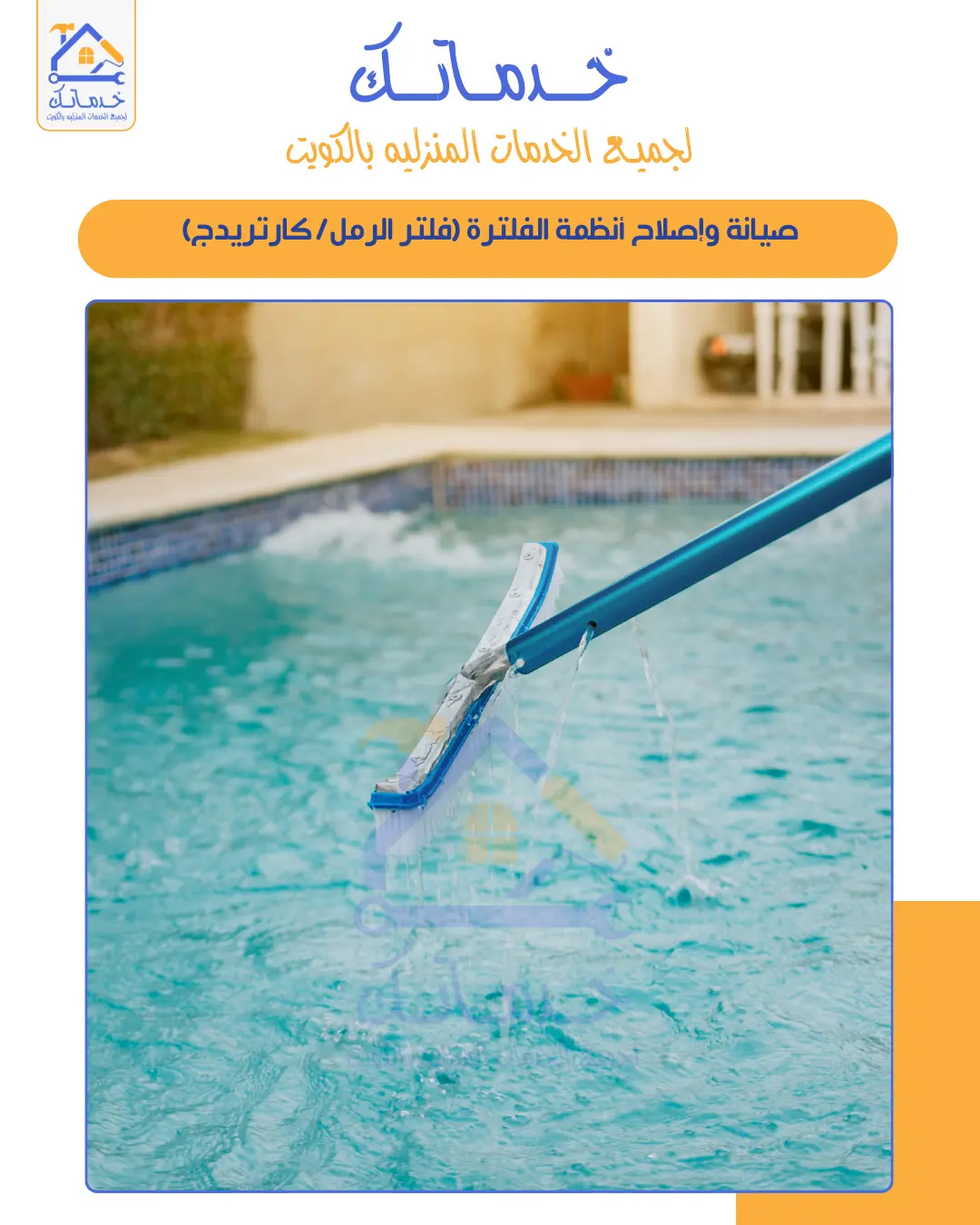
Replacing pool filter sand in Kuwait is one of the important maintenance tasks that directly affects water quality and the efficiency of the filtration system.
Many pool owners believe that regular filter cleaning is enough to maintain clean water, but over time the sand loses its ability to trap dirt, sediments, and impurities, which leads to weaker filtration performance and problems such as cloudy water or increased dependence on chemical treatments.
Knowing the correct sand filter replacement time and performing the replacement method properly helps maintain clean pool water and reduces future system problems.
Therefore, a sand filter requires regular inspection by a specialized technician to evaluate its condition and perform maintenance work correctly according to the pool system requirements.
Pool Filter Sand Replacement in Kuwait to Improve Water Quality and Filtration Efficiency

Replacing pool filter sand in Kuwait is one of the most important steps that helps maintain the performance of the water filtration system because the sand inside the filter is the main component responsible for trapping dirt, sediments, and impurities that pass through the pool water during filtration.
With continuous pool usage, large amounts of dust and small particles accumulate inside the sand, and over time the sand begins to lose its ability to provide the same filtration efficiency even when regular backwashing is performed.
At first, pool owners may not notice an obvious problem, but when the filter performance becomes weaker, several signs start appearing, such as slow water cleaning, continued cloudiness, or the need to operate the filtration system for longer periods.
Before performing pool filter sand replacement in Kuwait, the technician inspects the complete filtration system, not only the sand itself.
The filter pressure is checked, the pump operation is reviewed, and the water circulation process is examined.
The condition of the existing sand is also evaluated to determine whether complete replacement is required or whether the problem is caused by another part of the filtration system.
Through practical experience, some pool owners try to solve cloudy water problems by adding more cleaning chemicals or increasing chlorine levels, but the real issue may be that the old sand has lost its ability to remove impurities properly.
Therefore, replacing the sand at the correct time is often a more effective solution than relying on temporary treatments.
During the replacement process, the old sand is removed carefully to avoid damaging the filter tank or internal components.
The filter tank is cleaned, and new sand with suitable specifications is added according to the filter size and system requirements.
After completion, the filter is operated and monitored to ensure that water pressure is normal and filtration performance has improved.
Water quality is also tested to confirm faster removal of impurities.
Therefore, professional pool filter sand replacement in Kuwait helps improve filter performance and maintains clean and safe pool water for use.
Sand Filter Replacement and When It Becomes Necessary to Maintain Pool Performance
Sand filter replacement is one of the maintenance procedures that requires regular monitoring according to usage duration and filter condition because sand does not maintain the same efficiency forever regardless of its quality.
The main function of sand inside a sand filter is capturing impurities from pool water as it passes through filtration layers, but over time the nature of the sand changes due to accumulated sediments and trapped materials.
When the sand loses its ability to work efficiently, the filter may require longer operating periods to achieve acceptable water quality.
Before performing sand filter replacement, several important factors are inspected.
The technician checks the age of the current sand, pool operating frequency, water quality, and the level of regular maintenance performed.
Filter pressure is also reviewed to determine whether there is blockage or reduced water flow efficiency.
Through practical experience, delaying sand replacement for a long time may cause pool owners to spend more money on cleaning chemicals without achieving the required results.
Old sand may not be able to remove fine particles effectively even if the filtration system operates continuously.
Therefore, knowing the correct replacement time helps maintain water balance and reduce maintenance problems.
After removing the old sand, the internal filter components are cleaned and inspected to ensure they are in good condition.
The new sand is installed in the correct quantity because adding too much or too little sand may affect filtration performance.
After installation, the system is tested and filter pressure is monitored to ensure normal operation.
Therefore, timely sand filter replacement is an essential step for maintaining clean pool water and extending the lifespan of filtration equipment.
Pool Filter Sand and Its Role in Water Purification and Removing Impurities

Pool filter sand is the main component inside a sand filtration system because it works as a purification layer that water passes through to remove dirt, sediments, and small particles before returning back to the pool.
Choosing the correct type of sand and installing it properly directly affects filtration efficiency.
Not all types of sand are suitable for pool filters because the material used must have specific characteristics that allow water flow while effectively trapping impurities.
With continuous use, pool filter sand becomes filled with accumulated dirt and particles.
Although backwashing helps remove part of these deposits, it cannot restore old sand to its original efficiency after long periods of operation.
Before replacing the sand, the technician checks the filter condition and determines whether weak filtration is caused by the sand itself or by another issue in the pump or circulation system.
Through practical experience, using unsuitable sand or installing an incorrect amount can lead to poor filtration performance even if the filter itself is new.
Therefore, selecting the right sand and installing it correctly requires knowledge of filter size and pool operation requirements.
After installing new sand, water movement is tested and the technician confirms that there are no pressure problems.
The system is also checked to ensure that water passes through the sand layers correctly.
Therefore, maintaining the condition of pool filter sand helps improve water quality and keeps the filtration system operating efficiently for a longer period.
Pool Filter Maintenance to Maintain Filtration Efficiency and Reduce Water Problems
Pool filter maintenance is one of the essential steps that helps keep the filtration system working efficiently because the filter is responsible for removing impurities and maintaining clear water throughout the pool operation period.
Many pool owners focus only on cleaning the water surface and adding chemical treatments, but ignoring the filter may cause problems even when chemical treatment is performed correctly.
Filter maintenance includes several procedures that begin with checking operating pressure, reviewing pump performance, and ensuring that water circulation inside the system works properly.
The condition of the sand inside the filter is also inspected because long-term accumulation of dirt may reduce the filter’s ability to purify water effectively.
During pool filter maintenance, all parts connected to the system are checked, including valves, connections, and the pressure indicator.
The backwashing process is also reviewed to ensure it is performed correctly because improper cleaning may leave sediments inside the sand.
Through practical experience, some pool owners wait until a visible problem appears, such as cloudy water, before performing maintenance, but regular inspection helps detect issues early and prevents larger failures.
Regular maintenance also helps reduce chemical consumption because an efficient filter keeps water cleaner and more balanced.
After completing the inspection, the system is tested to confirm that water circulation has returned to normal.
Recommendations are also provided regarding filter cleaning schedules and sand replacement timing according to usage conditions.
Therefore, regular pool filter maintenance is an important investment for maintaining water quality and extending the lifespan of pool equipment.
Sand Filter Replacement Schedule and Signs That Indicate Reduced Efficiency
Knowing the correct sand filter replacement schedule helps pool owners maintain water quality and avoid problems caused by reduced filtration performance.
Filter sand does not need daily replacement, but over time it loses part of its ability to trap impurities because of continuous use and accumulated sediments.
The replacement period varies depending on several factors, including pool operating frequency, filter size, water volume, and the level of regular maintenance.
One of the signs indicating the need for replacement is continued cloudy water despite running the filtration system for long periods.
Another sign is increased filter pressure or the need to perform backwashing more frequently than usual.
When determining the sand filter replacement schedule, the technician inspects the sand condition and the entire filtration system before deciding whether replacement is required.
Not every decrease in filter performance means that the sand has reached the end of its life, because the problem may be related to the pump or another part of the circulation system.
Through practical experience, replacing sand too early may create unnecessary costs, while delaying replacement for too long can reduce water quality and increase chemical usage.
Therefore, proper evaluation helps determine the correct replacement time.
After deciding that replacement is needed, the old sand is removed, the filter is cleaned, and new sand is installed correctly.
The system is then tested to confirm that filtration efficiency has returned.
Therefore, monitoring the sand filter replacement schedule is an important step for keeping pool water clean and reducing future maintenance problems.
Sand Filter for Pools and the Importance of Choosing the Right System Size
A sand filter for pools is one of the most commonly used filtration systems because it provides an effective and simple method for removing impurities from pool water.
The sand filter works by passing water through layers of sand that trap dirt and suspended particles before returning the cleaned water back into the pool.
However, choosing the right filter does not depend only on the device size. It must match the pool size and the amount of water that requires filtration.
Selecting a filter that is smaller than required may reduce performance, while choosing a system larger than necessary may increase operating and maintenance costs without providing real benefits.
When installing a sand filter for pools, several factors are evaluated, including pool volume, pump capacity, water flow rate, and daily operating hours.
The suitable sand type and filling method are also selected according to the filter specifications.
Through practical experience, some pool problems are not caused by filter quality but by choosing a filter size that does not match pool requirements or by incorrect installation.
Therefore, studying the complete system before installation or replacement helps achieve better results.
After installing the filter, water movement is tested and filtration performance is checked.
The system settings are also adjusted according to proper operating requirements to maintain water quality.
Therefore, selecting a suitable sand filter for pools is one of the most important factors for maintaining clean water and an efficient filtration system.
Improving Pool Water Filtration Through Proper Maintenance and Timely Sand Replacement
Improving pool water filtration is an essential goal for every pool owner who wants to maintain clear and clean water throughout the usage period.
Filtration quality does not depend only on operating the system, but also on the condition of the filter, the sand inside it, and the overall maintenance of the equipment.
When the sand becomes old or loses its ability to trap impurities, filtration efficiency begins to decrease even if the system continues running for long hours.
Therefore, monitoring sand condition and performing maintenance at the correct time helps improve system performance.
The process of improving pool water filtration includes several steps such as inspecting the filter, cleaning internal components, checking pump operation, and replacing sand when necessary.
The operating method of the system is also reviewed to ensure that water circulation is working correctly.
Through practical experience, some pool owners try to solve cloudy water problems by increasing chlorine levels only, but the actual cause may be weak filtration performance.
Therefore, treating the main cause provides a more effective and stable result.
After improving the system, water quality is tested and the speed of removing sediments and impurities is monitored.
Filter pressure is also checked to ensure proper operation.
Therefore, improving pool water filtration through correct maintenance helps reduce problems and keeps pool water quality stable for a longer period.
Pool Filter Technician for Professional Sand Replacement and Maintenance
Choosing a specialized pool filter technician is one of the most important steps when replacing sand or performing any maintenance work on a filtration system because the sand filter contains internal components that require careful handling to ensure efficient operation after maintenance.
The sand replacement process is not simply removing old sand and adding new material. It requires knowledge of filter size, installation method, and the correct type of sand suitable for the system.
The technician begins by inspecting the filter condition before starting the work.
The reason behind poor filtration is evaluated to determine whether the issue is caused by expired sand or another problem in the pump or water circulation system.
Filter pressure is also checked to understand how efficiently water passes through the system.
During the work of a pool filter technician, old sand is removed carefully to avoid damaging the internal parts of the filter.
The inside of the filter tank is cleaned, and all internal components are inspected before installing the new sand.
The correct amount of sand is selected according to the filter capacity because using too much or too little sand can affect filtration performance.
Through practical experience, some problems that appear after sand replacement happen because unsuitable sand was used or the installation process was not completed correctly.
Therefore, relying on an experienced technician helps ensure that the system operates efficiently after maintenance.
After completion, the filter is operated, pressure is monitored, and the system is checked for any leaks.
Water quality is also tested to confirm that filtration performance has improved.
Therefore, hiring a professional pool filter technician helps complete maintenance correctly and keeps the pool filtration system efficient for a longer period.
Pool Filter Sand Replacement Cost and Factors That Determine Service Pricing
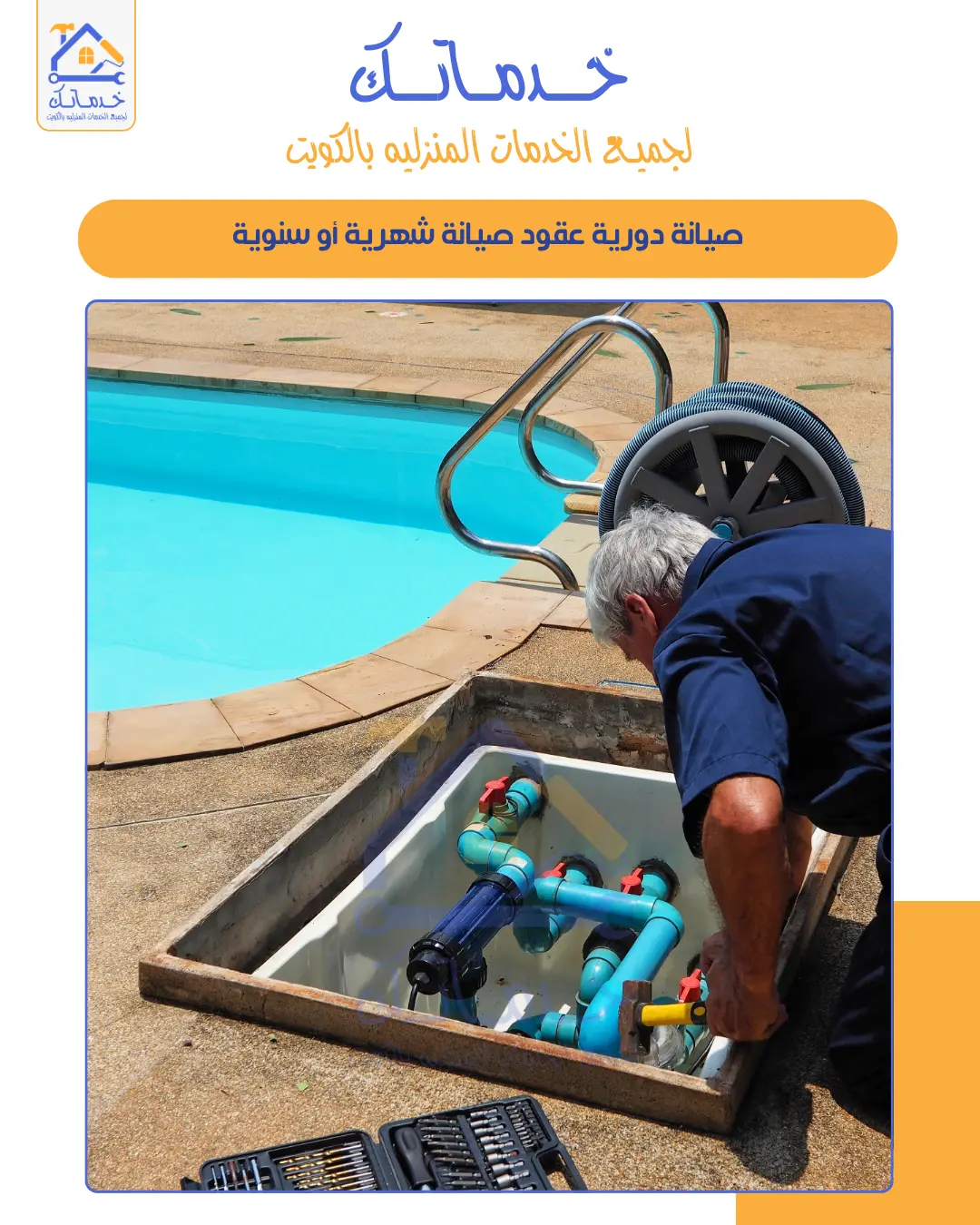
The pool filter sand replacement cost varies depending on several factors related to filter size, sand type, and the method used to complete the service.
Therefore, there is no fixed price for all pools because each filtration system has different requirements depending on its size and usage conditions.
One of the main factors affecting the cost is the size of the filter tank and the amount of sand required.
The type of sand used and the condition of the internal filter components also influence the final price.
Some filters only require sand replacement, while other systems may need internal cleaning or inspection of additional parts before operation.
The pool filter sand replacement cost usually includes removing old sand, cleaning the filter, installing new sand, and testing the system after completion.
However, the total cost may increase if there are additional problems with the pump, valves, or other filtration components.
Before starting the service, the technician inspects the filter and determines the actual requirements.
The appropriate solution is selected instead of replacing unnecessary parts.
Through practical experience, trying to reduce costs by using unsuitable sand or performing the replacement incorrectly may cause poor filtration performance and make the same problem return again.
Therefore, work quality and choosing the correct materials are more important than selecting the lowest price only.
After completion, the filter is tested to confirm that water passes through the system efficiently.
Therefore, knowing the exact pool filter sand replacement cost requires evaluating the filter condition, pool size, and maintenance requirements.
Sand Filter Cleaning to Maintain System Performance Before Sand Replacement
Sand filter cleaning is one of the essential maintenance tasks that helps maintain filtration system performance because regular cleaning reduces sediment accumulation inside the sand and keeps water movement more efficient.
Sand filters are usually cleaned through the backwashing process, which helps remove part of the dirt collected between sand layers.
However, this process does not mean that sand will remain effective forever because long-term use gradually reduces its filtration ability.
During sand filter cleaning, the technician checks filter pressure and monitors water movement through the system.
The control valve operation is also inspected to ensure that the cleaning cycle is performed correctly.
Through practical experience, some pool owners depend only on backwashing and believe it replaces sand replacement, but sand loses efficiency after a certain period even with regular cleaning.
Therefore, regular inspection helps determine whether the filter only needs cleaning or whether complete sand replacement is required.
After cleaning, the system is operated and water quality is monitored.
If filtration improves, the issue may have been caused by sediment buildup, but if the problem continues, replacing the sand may be the better solution.
Therefore, regular sand filter cleaning helps extend sand lifespan and improves filter performance before replacement becomes necessary.
Conclusion
Pool filter sand replacement in Kuwait is one of the most important maintenance services that directly affects water quality and filtration system efficiency.
The sand inside the filter works as a key element for removing dirt and impurities, but over time it loses its ability to purify water and requires replacement to maintain proper performance.
Knowing the correct sand filter replacement schedule and performing regular maintenance helps prevent problems such as cloudy water, weak filtration, and increased chemical consumption.
Choosing an experienced pool filter technician also ensures that the replacement and cleaning process is completed correctly without damaging internal filter components.
Regular maintenance and using suitable sand allow the filtration system to operate efficiently and keep pool water clean for a longer period.
Therefore, monitoring filter condition and avoiding waiting until major problems appear is the best way to protect the pool and reduce future repair costs.
Frequently Asked Questions
When does pool filter sand need replacement?
Sand needs replacement when filtration efficiency decreases or cloudy water continues despite regular cleaning and backwashing.
Does sand filter cleaning replace sand replacement?
No. Cleaning removes accumulated sediments, but it cannot restore old sand to its original efficiency after its lifespan ends.
What are the signs that pool filter sand has lost effectiveness?
Common signs include poor filtration, continued cloudy water, increased filter pressure, and longer operating times.
Can I replace pool filter sand without a technician?
It is possible, but hiring a specialized technician is recommended to avoid damaging filter parts or installing an incorrect amount of sand.
What type of sand is used in pool filters?
Pool filters require specially designed filter sand with specific properties that allow water flow while trapping impurities.
Does replacing sand improve pool water quality?
Yes. Replacing sand at the correct time improves filtration performance, reduces impurities, and helps maintain clear water.
What factors affect pool filter sand replacement cost?
The cost depends on filter size, required sand quantity, sand type, and the overall condition of the filtration system.
Does a pool filter require regular maintenance?
Yes. Regular maintenance helps detect problems early and keeps the filter and pool water working efficiently for a longer time.