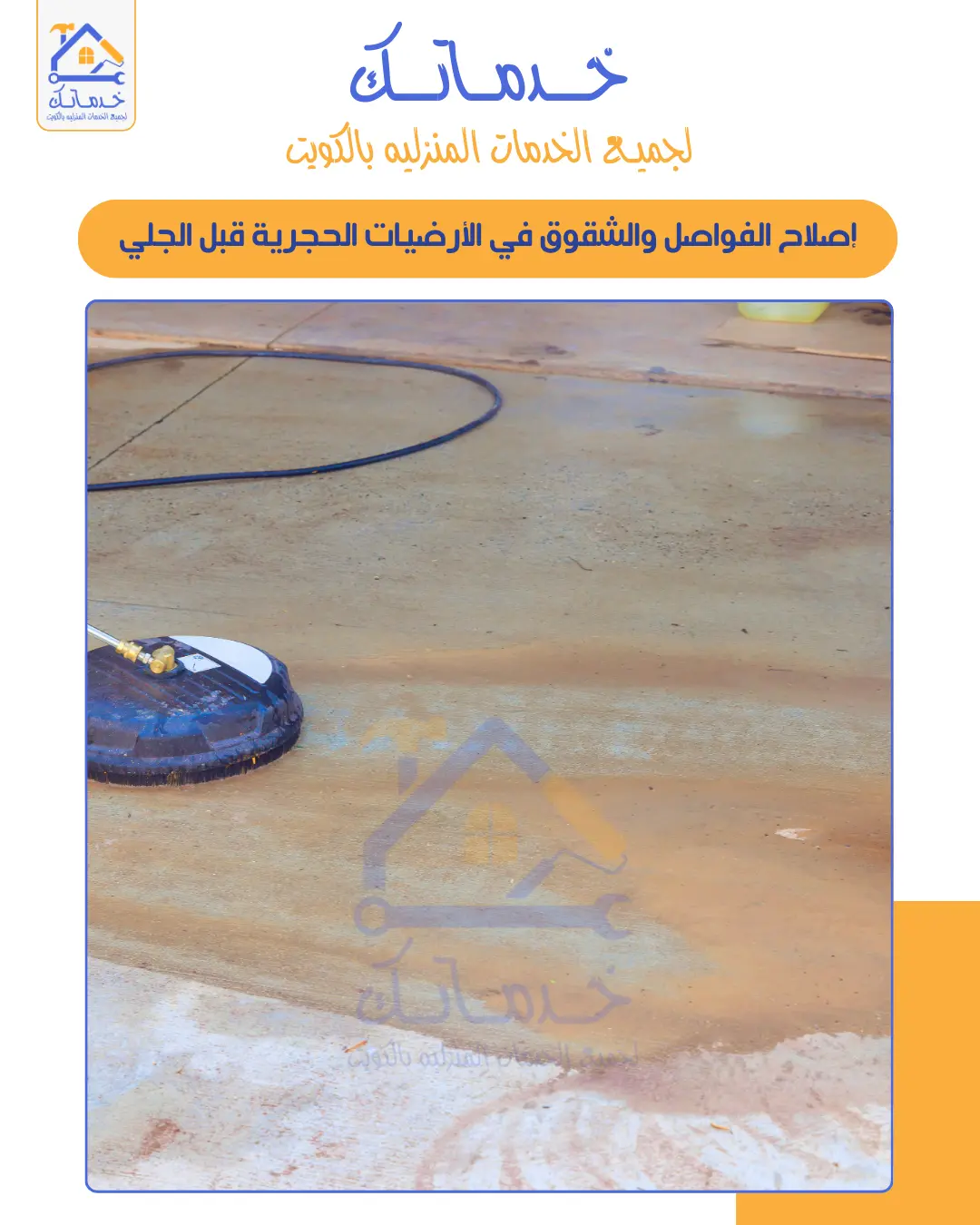
Marble joints are important details that directly affect the appearance of marble floors, entrances, and surfaces. Over time, joints may wear out, change color, or develop gaps that negatively affect the overall look.
Therefore, renewing marble joints in Kuwait is an essential step before performing marble grinding and polishing because polishing marble without repairing damaged joints may not provide the desired result.
Treating the joints helps restore floor consistency and reduces the accumulation of dirt and moisture inside the gaps.
For this reason, the work requires a specialized technician who understands how to handle marble and choose suitable materials that maintain the strength and natural appearance of the surface.
Renewing Marble Joints in Kuwait and the Importance of Treatment Before Polishing

Renewing marble joints in Kuwait is one of the essential steps that should be completed before starting marble grinding and polishing because old joints may cause an uneven appearance even after cleaning and polishing the marble surface.
Many homeowners focus only on marble shine but ignore the condition of the joints between marble pieces, although these joints are an important part of the overall floor appearance.
Over time, marble joints may be affected by different factors such as dust accumulation, color changes, loss of old filling material, or small gaps caused by continuous usage and floor movement.
When performing renewing marble joints in Kuwait, the technician first inspects the condition of the joints and determines the level of damage.
It is identified whether the joints only need cleaning and refilling or whether damaged materials must be removed and completely restored.
Through practical experience, performing marble grinding and polishing before repairing joints may lead to an incomplete result because damaged joints remain visible even after improving the marble shine.
Therefore, arranging the work steps correctly is important to achieve a professional outcome.
The joints are prepared by removing weak materials and refilling them with suitable products that match the marble color and floor appearance.
After completion, the floor becomes more consistent and ready for the grinding and polishing stage.
Important points about renewing marble joints in Kuwait:
-
Treating joints before polishing helps achieve a more consistent floor appearance and better final results.
-
Inspecting joint condition determines the correct method instead of applying unnecessary solutions.
-
Renewing joints reduces dirt accumulation and helps preserve marble beauty for a longer period.
Repairing Marble Joints and Treating Damage Caused by Long-Term Usage
Repairing marble joints is an important process for maintaining marble floors, especially in areas with heavy daily movement such as entrances, living rooms, and hallways.
The joints between marble pieces help maintain the overall floor appearance, and when these joints become damaged, problems may appear such as dust buildup, uneven sections, or an old-looking floor surface.
When performing repairing marble joints, the problem is first evaluated to identify the cause of damage.
The reason may be the wearing of old joint material, partial loss of filling, or exposure to moisture and continuous cleaning.
The joints are prepared before repair by removing weak parts and cleaning the area properly.
Through practical experience, applying new material over old damaged joints without proper preparation does not provide a long-lasting result because the original problem may remain underneath.
Therefore, correct work starts with preparation rather than simply adding new filling material.
After preparing the joints, they are filled carefully until they reach a suitable level close to the marble surface.
Attention is also given to color matching so the joints do not appear separate from the rest of the floor.
After completion, the floor is inspected and prepared for the next stages such as grinding or polishing.
Important points about repairing marble joints:
-
Removing damaged materials before repair increases the strength and durability of new joints.
-
Proper preparation prevents the problem from returning quickly.
-
Joint repair improves floor appearance and helps maintain marble stability.
Filling Marble Joints and Choosing Suitable Materials for a Stable Result

Filling marble joints is a process that requires accuracy because joints are not simply empty spaces between marble pieces, but they affect the final appearance and stability of the flooring.
Over time, joints may become empty or lower than the marble surface because the old filling material wears away, causing dirt accumulation and affecting floor cleanliness.
When performing filling marble joints, the suitable filling material is selected according to marble type and location of use.
Residential floors may require different materials compared with commercial areas exposed to heavier traffic.
The joints are cleaned and prepared before filling to ensure proper adhesion of the new material.
Through practical experience, choosing the correct filling color is important because an unsuitable color can make the joints stand out and affect the beauty of the marble.
Therefore, a color close to the marble or matching the desired design is selected.
After filling, the joints are leveled and checked to ensure there are no gaps or uneven areas.
The surface is also allowed to set properly before moving to marble grinding and polishing stages.
Important points about filling marble joints:
-
Choosing suitable filling materials affects joint durability and final appearance.
-
Cleaning joints before filling improves the stability of the new material.
-
Matching joint color with marble creates a more professional appearance.
Restoring Marble Joints and Rehabilitating Old Marble Floors
Restoring marble joints is a suitable solution for floors that have started showing signs of aging or damage, as it helps improve the marble appearance without the need to replace the entire floor.
Some marble floors remain in good overall condition, but the main problem appears in the joints that have lost their appearance due to long-term usage.
When performing restoring marble joints, the entire floor condition is evaluated rather than only the damaged joints.
It is confirmed that there are no additional issues such as moving marble pieces or large cracks that require a different type of treatment.
Through practical experience, successful restoration depends on understanding the actual cause of the problem because treating only the external appearance may cause the damage to return again after a short period.
Therefore, proper preparation steps are considered essential before rebuilding the joints.
After restoration, the floor becomes more prepared for marble grinding and polishing processes that restore shine and improve the overall appearance.
Important points about restoring marble joints:
-
Restoration helps extend the lifespan of existing marble floors.
-
Evaluating floor condition before work prevents unsuitable repair solutions.
-
Proper joint restoration improves the overall appearance of marble surfaces.
Treating Marble Cracks and Preventing Further Surface Damage
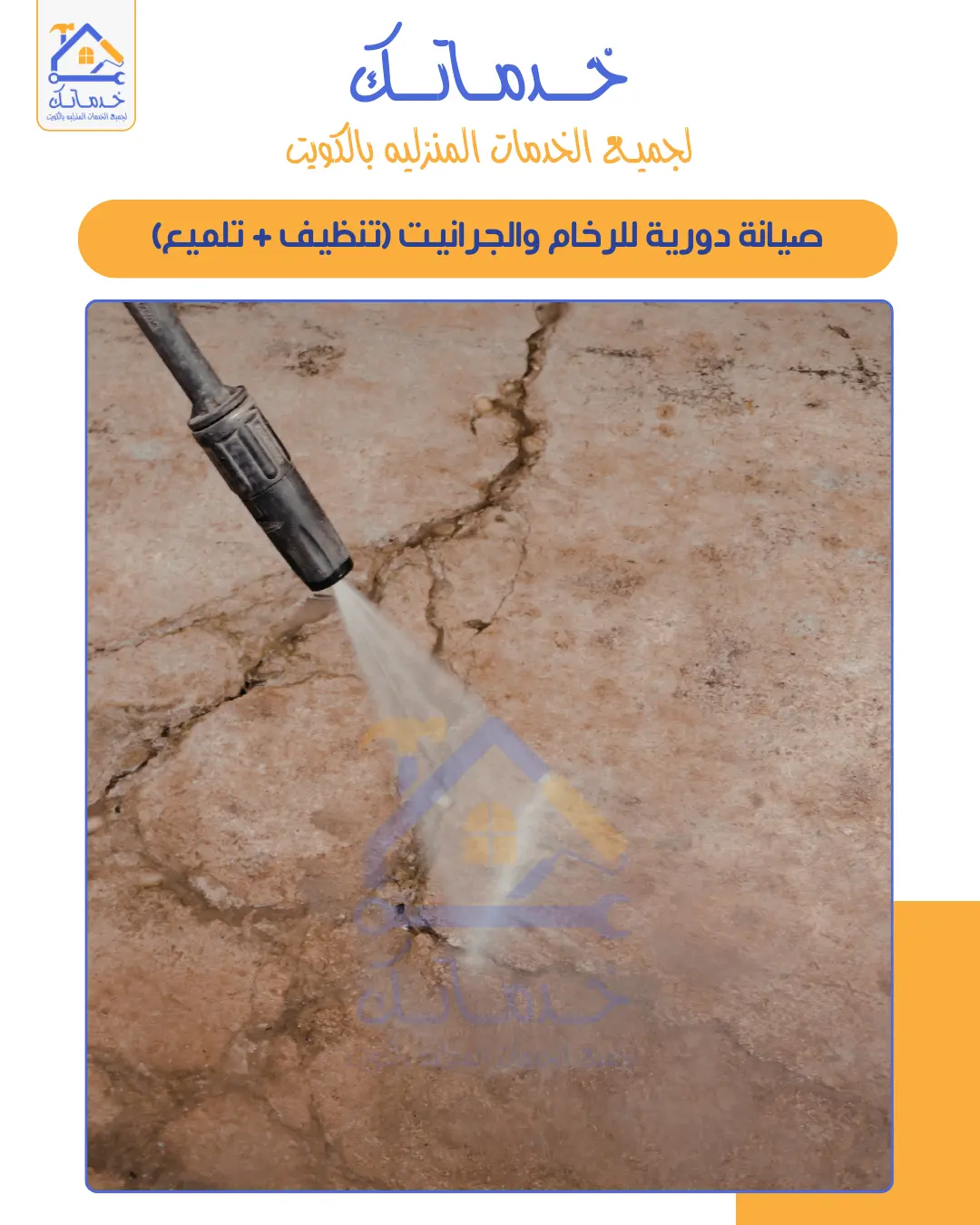
Treating marble cracks is an important step for maintaining marble floors and surfaces because small cracks, if ignored, may expand over time and affect both appearance and strength.
Marble cracks can appear due to different reasons such as slight floor movement, temperature changes, weak old joints, or pressure on frequently used areas.
Some cracks may be superficial and require simple treatment, while deeper cracks need careful evaluation before choosing the correct repair method.
When performing treating marble cracks, the technician first inspects the crack location and determines its size and cause.
It is identified whether the issue is related to the joint or the marble piece itself because treatment methods differ depending on the condition.
Through practical experience, attempting to hide cracks without identifying the cause may cause the problem to return after a short period.
Therefore, proper treatment begins with diagnosis followed by selecting the suitable solution.
The crack area is cleaned and prepared before applying suitable repair materials, then the area is leveled to become close to the marble surface level.
After completion, the result is evaluated to ensure the area is stronger and ready for marble grinding and polishing stages.
Important points about treating marble cracks:
-
Identifying the cause of cracks before repair helps prevent repeated problems.
-
Early crack treatment reduces the possibility of damage expansion.
-
Professional repair preserves marble appearance and extends its lifespan.
Preparing Marble Before Grinding and Polishing for the Best Final Result
Preparing marble before grinding is an essential stage that should not be ignored because the success of marble grinding and polishing depends greatly on the condition of the marble and joints before starting the process.
Many people believe that polishing alone can hide all marble problems, but damaged joints, cracks, and gaps must be treated first to achieve a clear and professional result.
When performing preparing marble before grinding, the entire floor is inspected and existing problems are identified.
The condition of joints, presence of cracks, and areas requiring filling or repair are evaluated before using grinding equipment.
Through practical experience, starting the grinding process directly on a floor with damaged joints may improve surface shine, but the main defects will remain visible.
Therefore, proper marble preparation before grinding is an important investment for achieving a long-lasting result.
Preparation includes cleaning joints, removing weak materials, filling gaps, and treating any issues that affect the marble surface.
After completing these steps, the marble becomes ready for grinding and polishing with better effectiveness.
Important points about preparing marble before grinding:
-
Proper preparation helps achieve an even shine across all parts of the marble floor.
-
Treating joints and cracks prevents defects from appearing after polishing.
-
Correct preparation provides better results and reduces the need for repeated work.
Renewing Marble Floors and Restoring the Luxury Appearance of Old Surfaces

Renewing marble floors is a suitable solution for floors that have lost part of their beauty due to long-term use or insufficient maintenance.
Marble is a material that can often regain its appearance when treated correctly, so replacing the entire floor is not always the only solution.
Over the years, problems such as color dullness, reduced shine, damaged joints, and difficult stains may appear.
When performing renewing marble floors, the condition of the floor is evaluated and the required steps are determined.
Some floors may only require joint repair, while others may need several stages including treatment, grinding, and polishing.
Through practical experience, the final result does not depend only on polishing but starts with preparing the floor and treating existing problems beforehand.
Therefore, marble renewal is a complete process rather than a single step.
After completion, the floor becomes cleaner, shinier, and regains much of its original appearance.
Important points about renewing marble floors:
-
Renewal improves floor appearance without requiring complete replacement.
-
Treating old problems before polishing provides clearer results.
-
Proper maintenance after renewal preserves marble appearance for a longer period.
Maintaining Marble Joints to Preserve Floor Cleanliness and Stability
Maintaining marble joints is a preventive service that helps avoid larger problems in the future because joints are an essential part of marble flooring structure.
Ignoring joint maintenance may lead to dirt accumulation, loss of filling material, and changes that affect floor appearance and stability.
When performing maintaining marble joints, the joints are inspected regularly and their condition is evaluated.
Areas requiring attention are cleaned, and minor damage is treated before becoming a larger problem.
Through practical experience, regular maintenance requires less cost and effort compared with waiting until joints deteriorate and require complete restoration.
Therefore, monitoring marble joints is an important part of preserving marble quality.
Maintenance includes cleaning joints, refilling weak areas, and checking the surrounding marble condition.
Important points about maintaining marble joints:
-
Regular maintenance prevents problems from building up inside joints.
-
Early damage detection reduces repair costs.
-
Maintaining joints preserves floor appearance and marble stability.
Marble Restoration Technician in Kuwait and the Importance of Experience in Joint Repair
Choosing a professional marble restoration technician in Kuwait is an important step for achieving good results when repairing joints or treating marble problems because this work requires experience in handling different marble types.
A specialized technician does not start the work randomly but first inspects the floor and identifies the problem before selecting the appropriate restoration method.
When hiring a marble restoration technician in Kuwait, the condition of joints and cracks is evaluated and the suitable repair materials are selected.
The steps required before grinding and polishing are also determined to achieve the best possible result.
Through practical experience, the difference between regular work and professional restoration appears in the final details such as joint color consistency, filling level, and overall cleanliness of execution.
After completion, the floor is inspected to ensure that the marble is ready for the next stages.
Important points when choosing a marble restoration technician in Kuwait:
-
Experience helps identify the correct solution instead of providing temporary repairs.
-
A specialized technician understands how to deal with different marble types.
-
Restoration quality directly affects the final appearance after grinding and polishing.
Cost of Renewing Marble Joints and Factors That Determine the Final Price
The cost of renewing marble joints varies depending on the floor condition and the amount of work required, so there is no fixed price for every project because each marble floor has different needs based on age, damaged joint quantity, and required treatment method.
Some projects only require refilling joints that have lost part of their material, while other projects require removing old joint material completely and restoring the joints before grinding and polishing.
When determining the cost of renewing marble joints, several important factors are considered.
The most important factors include the area size, number of damaged joints, overall marble condition, and the type of materials used for filling or restoration.
The difficulty level of the work also affects the price because floors with cracks or major damage require more time and effort compared with floors needing simple maintenance.
Through practical experience, trying to reduce costs by choosing temporary solutions may lead to repeating the work again after a short period. Therefore, proper treatment from the beginning is usually the better option.
Preparing marble before grinding and polishing is also an important part of the overall cost because it directly affects the final quality of the result.
After evaluating the condition, the required steps can be determined and the most suitable solution can be provided according to the floor needs.
Important points about the cost of renewing marble joints:
-
The price depends on joint condition, not only the floor area.
-
Correct repair from the beginning reduces repeated maintenance costs in the future.
-
Evaluating marble before work helps determine the required budget and steps accurately.
Conclusion
Renewing marble joints in Kuwait is an important process that helps restore the beauty of marble floors and prepare them for the best results during grinding and polishing.
Damaged or old joints can affect the appearance of marble even when the marble surface itself is in good condition. Therefore, treating joints is an essential part of marble renewal.
Through services such as repairing marble joints, filling marble joints, and restoring marble joints, the floor appearance can be improved and problems caused by gaps or damaged areas can be reduced.
Proper preparing marble before grinding also helps achieve an even shine and a more professional final appearance.
Relying on a skilled marble restoration technician in Kuwait ensures choosing the correct method according to floor condition instead of using temporary solutions that may not provide the required results.
Therefore, paying attention to marble joints and performing regular maintenance is an important investment for preserving marble beauty and extending its lifespan without needing complete replacement.
Frequently Asked Questions
Why should marble joints be renewed before grinding and polishing?
Because damaged joints can affect the final appearance even after polishing. Repairing them first helps achieve a more consistent result.
Can old marble joints be repaired?
Yes, most old joints can be repaired by removing damaged materials, cleaning the area, and refilling them with suitable products.
When do marble joints need restoration?
Joints need restoration when gaps appear, colors change, old filling material comes out, or dirt accumulates inside them.
Does renewing marble joints eliminate the need to replace the floor?
In many cases, yes, especially when the marble pieces are still in good condition and the main issue is only with the joints.
Can marble grinding be performed before repairing joints?
It is recommended to repair joints first because this helps achieve better results and prevents defects from appearing after polishing.
What is the difference between filling and restoring marble joints?
Filling is usually for simple gaps and missing material, while restoration includes wider treatment for damaged or old joints.
How long does marble joint renewal take?
The duration depends on the area size, joint condition, and the number of sections requiring repair.
Why should a specialized marble restoration technician be hired?
Because marble requires careful handling, and experience helps choose the right materials and methods without affecting the floor appearance.