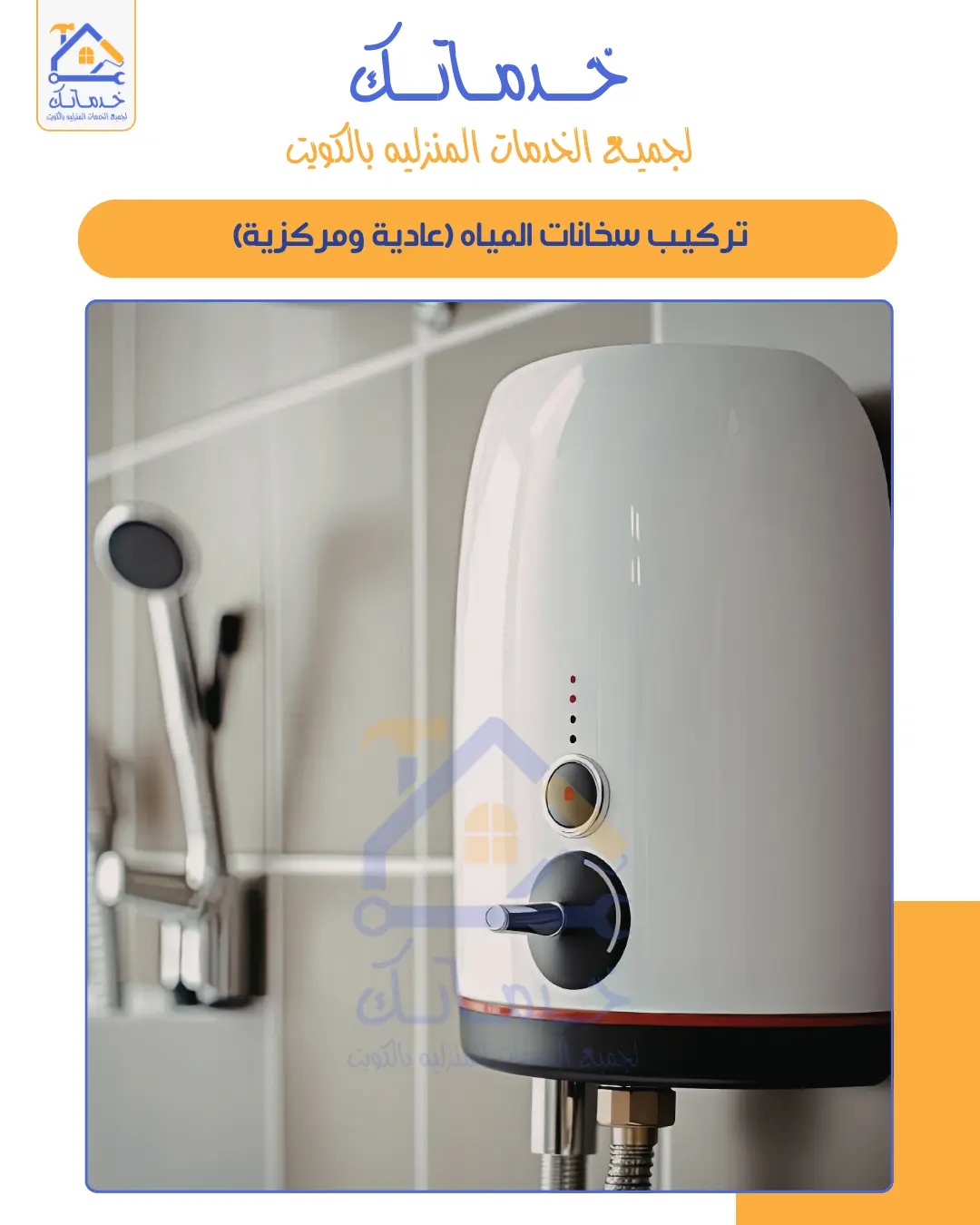
Installing a water heater is a technical task that requires precision because the quality of installation directly affects not only how quickly hot water becomes available but also the overall level of safety, energy efficiency, and the operational lifespan of the entire system. Extensive practical experience installing water heaters throughout Kuwait has consistently demonstrated that many problems appearing shortly after installation are not caused by manufacturing defects but by incorrect installation practices, poor plumbing connections, unsuitable electrical or gas supplies, or selecting a water heater that does not match the household's actual consumption requirements. Professional installation therefore begins with a complete site evaluation, careful inspection of the water network together with the electrical or gas supply, and selection of the most suitable installation method to achieve maximum operating efficiency, reduced energy consumption, dependable safety, and reliable long-term performance for every member of the household.
Why Does Installing Electric Water Heaters in Kuwait Require Careful Engineering Planning Before Installation?
Installing electric water heaters in Kuwait requires comprehensive engineering planning before installation begins because the performance of an electric water heater depends on the correct coordination of electrical capacity, storage tank size, household water pressure, installation location, safety protection systems, and plumbing design. Any weakness affecting one of these elements may reduce heating efficiency, increase electricity consumption, shorten equipment lifespan, or compromise operational safety. Extensive practical experience installing electric water heaters throughout Kuwait has consistently demonstrated that many operational problems appearing after installation are caused by undersized electrical wiring, overloaded electrical circuits, poor installation locations that complicate future maintenance, or plumbing layouts that reduce overall system efficiency. Professional technicians therefore begin every installation by thoroughly inspecting the installation site before measuring electrical voltage, verifying that the electrical circuit can safely support the required power load, evaluating household water pressure, and selecting the most appropriate installation location to maximize convenience, accessibility, and long-term reliability. Every necessary safety device, including residual current protection, pressure relief valves, and non-return valves whenever required, is installed while ensuring that the mounting structure can safely support the full operational weight of the water heater after the storage tank has been completely filled. Following installation, the water heater undergoes comprehensive operational testing that includes monitoring heating speed, electrical current consumption, thermostat operation, pressure stability, and confirming that every plumbing and electrical connection remains completely leak-free. Extensive practical experience throughout Kuwait consistently demonstrates that proper engineering planning before installation delivers maximum heating efficiency, minimizes future maintenance requirements, enhances household safety, and significantly extends the operational lifespan of electric water heating systems.
How Are Gas Water Heaters Professionally Installed for Homes and Villas According to the Highest Safety Standards?
Installing gas water heaters for homes and villas requires strict compliance with professional engineering safety procedures because these heating systems rely on combustible gas as their primary energy source, making accurate installation absolutely essential for preventing gas leakage, ensuring stable combustion, and maintaining safe long-term operation. Extensive practical experience installing gas water heaters throughout Kuwait has consistently demonstrated that selecting the correct installation location is one of the most important safety factors. Proper ventilation, adequate safety clearances, and the use of certified gas supply connections specifically designed for long-term operating pressure all contribute significantly to dependable system performance. Professional technicians therefore begin by carefully inspecting the existing gas distribution network before verifying the condition of every supply line. The water heater is then securely mounted using appropriate structural supports while all safety valves, gas regulators, flame supervision systems, and automatic shutoff mechanisms are professionally installed and calibrated. Every gas connection undergoes comprehensive leak detection testing using specialized gas detection equipment before water supply lines are connected according to engineering standards designed to maintain stable water pressure while preventing reverse flow. Ignition systems, flame sensors, safety controls, and automatic gas shutoff functions are extensively tested before the heater enters normal operation. Following completion of the installation, the complete system undergoes repeated operational testing that includes flame stability analysis, heating performance evaluation, gas consumption monitoring, and verification of every safety protection system before the installation is officially completed. Extensive practical experience throughout Kuwait consistently demonstrates that professionally installed gas water heaters provide exceptional operating safety, stable heating performance, efficient fuel consumption, and long-term reliability while minimizing installation-related failures.
What Makes Installing Modern Solar Water Heaters Different from Traditional Water Heating Systems?
Installing modern solar water heaters differs significantly from installing electric or gas water heaters because solar heating systems depend upon capturing solar energy and converting it into thermal energy with maximum efficiency. This requires careful engineering evaluation of the installation site together with accurate calculation of solar collector orientation, roof conditions, and daily sunlight exposure throughout the entire year. Extensive practical experience installing solar water heating systems throughout Kuwait has consistently demonstrated that successful system performance depends not only on selecting a high-quality solar heater but also on designing the complete installation correctly, including solar collectors, insulated storage tanks, hot and cold water circulation lines, thermal insulation systems, and integrated safety protection equipment. Professional technicians therefore begin by evaluating the structural condition of the roof to ensure that it can safely support the complete solar heating assembly before determining the ideal collector angle and orientation required to maximize solar energy absorption throughout the day. High-temperature-resistant insulated piping is installed to minimize heat loss while transferring heated water between the solar collectors and the storage tank. Safety valves, expansion control devices, and system monitoring equipment are installed according to engineering specifications to ensure dependable long-term operation. Once installation has been completed, the complete solar heating system undergoes comprehensive operational testing including water temperature measurements, thermal transfer efficiency analysis, inspection of every plumbing connection, and verification that no heat loss or water leakage exists anywhere within the installation. Extensive practical experience throughout Kuwait consistently demonstrates that professionally installed modern solar water heating systems substantially reduce electricity consumption, deliver highly efficient hot water production, and provide exceptionally long operational lifespans when installed according to proper engineering standards.
When Is Replacing an Old Water Heater with a New One the Best Decision?
Replacing an old water heater with a new one is often the most economical and technically appropriate decision when repeated breakdowns begin affecting daily use or when repair costs become so frequent that continued maintenance is no longer financially practical. Extensive practical experience installing and servicing water heaters throughout Kuwait has consistently demonstrated that some water heaters continue operating efficiently for many years when properly maintained, while others eventually reach a stage where electricity or gas consumption increases significantly, heating efficiency declines, and internal tank corrosion, heating element deterioration, or control system failures become increasingly common. Professional technicians therefore begin by performing a complete engineering evaluation of the existing water heater, including inspection of the storage tank, external housing, heating elements, pressure performance, safety devices, and the overall condition of the internal operating system. Previous repair history and maintenance expenses are also carefully reviewed to determine whether continued repairs remain economically reasonable. Whenever engineering diagnosis confirms that the existing heater has become inefficient or presents potential operational risks, technicians recommend a modern replacement model that matches the household's daily hot water demand while taking into consideration storage capacity, energy efficiency, insulation quality, available installation space, and expected long-term operating costs. The existing heater is then safely disconnected and removed while every plumbing, electrical, or gas connection is carefully inspected before the new unit is installed. Once installation has been completed, the replacement heater undergoes comprehensive operational testing to verify rapid heating performance, stable operation, proper pressure regulation, and complete absence of leaks or installation defects. Extensive practical experience throughout Kuwait consistently demonstrates that replacing an aging water heater at the appropriate time significantly reduces recurring maintenance costs, improves energy efficiency, increases operational safety, and provides homeowners with dependable hot water for many years.
How Is a Water Heater Properly Connected to the Household Plumbing Network for Maximum Operating Efficiency?
Connecting a water heater to the household plumbing network is one of the most critical stages of installation because overall system efficiency depends just as much upon proper plumbing, electrical, or gas connections as it does upon the quality of the water heater itself. Extensive practical experience installing residential water heating systems throughout Kuwait has consistently demonstrated that many complaints involving poor heating performance, reduced water pressure, plumbing leaks, or unstable operation originate from incorrect installation practices rather than equipment defects. Professional technicians therefore begin by carefully inspecting the household plumbing system while evaluating water supply pressure and determining the most efficient routing for both hot and cold water distribution lines to minimize heat loss and ensure rapid delivery of hot water throughout the property. Pressure relief valves, non-return valves, isolation valves, and high-quality plumbing fittings specifically designed to withstand elevated temperatures and continuous operating pressure are installed whenever required. Every pipeline is securely supported to eliminate vibration, unnecessary mechanical stress, and long-term structural fatigue at connection points. For electric water heaters, electrical wiring is connected through appropriately rated circuit protection devices while gas water heaters undergo complete inspection of every gas connection together with comprehensive safety testing before operation begins. Following completion of the installation, the entire water heating system undergoes detailed operational testing including pressure stability analysis, heating performance evaluation, hot water distribution verification, and inspection of every plumbing connection to confirm complete leak-free operation. Extensive practical experience throughout Kuwait consistently demonstrates that professionally connecting a water heater to the household plumbing network significantly improves heating efficiency, reduces future maintenance requirements, stabilizes hot water delivery, and preserves the long-term reliability of the complete domestic water system.
How Are Central Water Heating Pipe Networks Professionally Designed to Deliver Hot Water Efficiently?
Designing and installing central water heating pipe networks requires careful engineering planning beginning during the construction or renovation phase because any mistake in the hot water distribution layout directly affects the speed of hot water delivery, increases thermal energy losses, raises long-term operating costs, and reduces overall system efficiency. Extensive practical experience constructing central water heating systems throughout Kuwait has consistently demonstrated that successful installations depend upon carefully distributing pipe routes, selecting correct pipe diameters, applying high-quality thermal insulation throughout the network, and minimizing distances between the central water heater and bathrooms, kitchens, and every hot water outlet. Professional engineers therefore begin by studying the architectural layout of the building together with the number of bathrooms, kitchens, plumbing fixtures, and anticipated daily hot water demand before calculating hydraulic loads and designing the most efficient pipe routing with minimal heat loss. High-temperature-resistant piping capable of safely withstanding continuous operating pressure is installed together with strategically positioned isolation valves and safety valves that simplify future maintenance without interrupting operation of the complete hot water system. Before walls or floors are permanently closed, the entire plumbing network undergoes high-pressure testing at pressures exceeding normal operating conditions to verify complete structural integrity and the absence of hidden leaks. Following completion of installation, the entire central heating network undergoes comprehensive operational testing including simultaneous hot water delivery to every outlet while technicians measure water temperatures, delivery times, pressure stability, and overall system performance. Extensive practical experience throughout Kuwait consistently demonstrates that professionally engineered central water heating networks provide superior household comfort, reduce long-term energy consumption, minimize future plumbing failures, and ensure dependable hot water distribution for many years.
How Do You Choose the Right Water Heater for Your Home Based on Household Size and Daily Hot Water Usage?
Choosing the right water heater for your home is one of the most important decisions affecting long-term operating efficiency, household comfort, and energy costs because a water heater that does not match actual daily demand may either run out of hot water too quickly or consume unnecessary electricity or gas without providing additional practical benefits. Extensive practical experience installing residential water heating systems throughout Kuwait has consistently demonstrated that many homeowners select water heaters based solely on purchase price or brand reputation, while the correct engineering decision should instead consider the number of family members, the quantity of bathrooms, expected daily hot water consumption, available installation space, and the energy source already available within the property. Professional technicians therefore begin by evaluating the homeowner's actual hot water requirements before determining the most appropriate storage capacity or recommending an instantaneous water heater whenever continuous on-demand heating better matches household usage patterns. Electric, gas, and solar water heaters are carefully compared according to energy efficiency, heating speed, long-term operating expenses, maintenance requirements, expected service life, and overall suitability for the property's infrastructure. Additional engineering considerations include insulation quality, safety protection systems, thermostat accuracy, replacement part availability, and future maintenance accessibility before any final recommendation is made. After the appropriate water heater has been selected, professional installation is completed followed by comprehensive operational testing to verify complete compatibility with the household plumbing network and expected daily demand. Extensive practical experience throughout Kuwait consistently demonstrates that selecting the correct water heater from the beginning provides the ideal balance between operating performance, energy efficiency, dependable hot water availability, and reduced long-term maintenance expenses.
What Factors Determine the Cost of Water Heater Installation Services in Kuwait?
Many homeowners ask about the cost of water heater installation services in Kuwait before scheduling installation. However, extensive practical experience installing residential water heating systems throughout Kuwait has consistently demonstrated that installation costs are influenced by numerous engineering factors rather than simply the purchase price of the water heater itself. Installation may be relatively straightforward when plumbing, electrical, or gas connections are already prepared, while other properties require completely new plumbing lines, upgraded electrical circuits, dedicated gas supply connections, or specialized infrastructure for central or solar water heating systems. Professional technicians therefore begin every project by inspecting the installation location, evaluating the household plumbing network, confirming the availability and condition of electrical or gas supplies, and determining whether existing infrastructure satisfies the engineering requirements of the selected water heater. Additional cost considerations include storage tank capacity, heater type, installation location, plumbing distances, thermal insulation requirements, structural mounting systems, safety protection devices, and the possible need to remove an existing water heater before installation of the replacement unit. Whenever additional modifications become necessary, homeowners receive a complete explanation of every required engineering procedure before installation begins, ensuring full transparency throughout the project. Following installation, the complete water heating system undergoes comprehensive operational testing to verify heating performance, plumbing integrity, electrical or gas safety, and complete leak-free operation. Extensive practical experience throughout Kuwait consistently demonstrates that engineering-based pricing provides homeowners with fair installation costs, eliminates unexpected expenses during the project, and guarantees professional installation tailored specifically to each property's technical requirements.
Why Is Choosing a Technician Who Installs All Types of Water Heaters the Best Way to Guarantee Safe and Reliable Operation?
Choosing a technician who installs all types of water heaters is one of the most important factors influencing installation quality because professional installation extends far beyond physically mounting the equipment. It includes designing and integrating a complete operating system consisting of plumbing connections, electrical or gas supplies, safety protection devices, operational testing, and engineering verification to ensure reliable performance for many years. Extensive practical experience installing water heating systems throughout Kuwait has consistently demonstrated that specialized technicians possess the expertise required to install electric water heaters, gas water heaters, solar heating systems, and central water heating installations while fully understanding the engineering differences between every technology together with their individual installation requirements. Professional technicians therefore begin by carefully evaluating the installation site before inspecting household plumbing together with electrical or gas infrastructure, selecting the safest and most efficient installation method according to manufacturer specifications and accepted engineering standards. Every required safety device is professionally installed while water pressure, heating elements, thermostats, control systems, and safety valves undergo complete testing before the heater is placed into normal operation. If any irregularities appear during testing, they are corrected immediately before the installation is considered complete. Homeowners also receive practical operating instructions together with maintenance recommendations designed to preserve maximum efficiency throughout the heater's operational lifespan. Extensive practical experience throughout Kuwait consistently demonstrates that relying upon a specialized water heater installation technician significantly reduces future equipment failures, improves operational safety, maximizes heating efficiency, and ensures dependable long-term performance regardless of the water heater technology selected.
How Do Energy-Efficient Water Heaters Reduce Long-Term Operating Costs?
Installing energy-efficient water heaters has become the preferred choice for many homeowners because modern water heating technology now offers highly insulated storage tanks, intelligent temperature control systems, and advanced heating elements capable of reducing energy consumption while maintaining rapid and consistent hot water production. Extensive practical experience installing water heating systems throughout Kuwait has consistently demonstrated that selecting an energy-efficient heater involves much more than reading the energy label attached to the appliance. Achieving maximum efficiency also depends upon choosing the correct storage capacity, matching the heater to the household's actual hot water demand, and ensuring that installation is completed according to proper engineering standards to minimize unnecessary heat loss throughout the plumbing network. Professional technicians therefore begin by evaluating the family's daily hot water consumption before recommending the water heater that offers the most effective balance between storage capacity, energy efficiency, heating speed, and long-term operating economy. Insulation quality, thermostat accuracy, heating element performance, and standby heat retention are all carefully considered because these engineering factors directly influence electricity consumption throughout the operational lifespan of the heater. Hot water distribution pipes are insulated using high-quality thermal insulation materials to reduce heat loss while thermostat settings are adjusted to provide comfortable water temperatures without unnecessary electrical consumption. Once installation has been completed, the complete system undergoes detailed operational testing to evaluate heating efficiency, recovery speed, thermostat operation, electrical consumption, and overall system performance under normal household conditions. Extensive practical experience throughout Kuwait consistently demonstrates that professionally installed energy-efficient water heaters significantly reduce electricity bills over the long term, provide consistently reliable hot water, operate with greater overall efficiency, and achieve considerably longer service life when installed and maintained according to proper engineering standards.
Conclusion
Installing a water heater is a long-term investment in household comfort, operational safety, and energy efficiency. For this reason, the quality of installation is just as important as the quality of the water heater itself. Extensive practical experience installing every type of residential water heating system throughout Kuwait has consistently demonstrated that many operational problems appearing shortly after installation are caused not by manufacturing defects but by incorrect engineering design, poor plumbing or electrical connections, improper sizing, or unsuitable installation methods. Choosing an experienced installation specialist who begins every project with complete site evaluation, infrastructure inspection, and careful engineering planning ensures dependable performance together with the highest standards of operational safety.
Throughout this comprehensive guide, we examined installing electric water heaters in Kuwait, explained the professional engineering requirements for installing gas water heaters for homes and villas, discussed the installation principles governing modern solar water heating systems, identified situations where replacing an old water heater with a new one becomes the most practical solution, described the correct engineering procedures for connecting a water heater to the household plumbing network, explained the importance of designing central water heating pipe networks, demonstrated how to choose the right water heater for your home, analyzed the engineering factors affecting water heater installation costs in Kuwait, highlighted the value of hiring a technician capable of installing every type of water heater, and finally explained how energy-efficient water heaters reduce long-term operating expenses while improving overall heating performance.
Ultimately, selecting the appropriate water heater, carrying out installation according to professional engineering standards, using high-quality plumbing materials and certified safety components, and performing complete operational testing before the system enters normal service all combine to provide homeowners with a safe, economical, highly reliable hot water system that delivers dependable performance for many years while minimizing future maintenance requirements.
Frequently Asked Questions
Which type of water heater is best for homes in Kuwait?
The ideal choice depends on household size, daily hot water demand, and the available energy source. Electric water heaters suit most homes, gas water heaters provide faster heating, while solar water heaters offer significantly lower long-term operating costs.
Can a new water heater be installed in place of an old one?
Yes. However, the existing plumbing, electrical, or gas connections should first be professionally inspected to verify compatibility with the new heater, and any outdated valves or fittings should be replaced whenever necessary.
How long does water heater installation usually take?
Installation time varies according to the type of heater and the condition of the existing infrastructure, although most residential water heater installations can be completed within a relatively short period once the installation site has been properly prepared.
Do gas water heaters require additional safety precautions during installation?
Yes. Proper ventilation, certified gas supply connections, comprehensive leak detection testing, and complete verification of every safety control system are essential before a gas water heater is placed into normal operation.
How is the correct water heater capacity determined?
Capacity is selected according to the number of household members, the number of bathrooms, expected daily hot water consumption, and the type of water heating technology being installed.
Do energy-efficient water heaters really reduce electricity consumption?
Yes. Modern water heaters equipped with advanced insulation, intelligent temperature controls, and high-efficiency heating elements consume considerably less electricity while maintaining excellent heating performance.
Is the water heater tested after installation has been completed?
Yes. Professional technicians perform comprehensive operational testing including pressure evaluation, heating performance analysis, inspection of every plumbing and electrical or gas connection, and complete verification of all safety protection systems before the installation is finalized.
When should an old water heater be replaced?
Replacement becomes the most practical option whenever breakdowns become frequent, energy consumption increases significantly, heating performance declines, the storage tank begins deteriorating, or continued repairs are no longer economically worthwhile.
Can a water heater be installed anywhere inside the house?
No. The installation location must provide sufficient structural support, adequate maintenance access, appropriate ventilation whenever required, and full compliance with the engineering and safety requirements specific to the selected water heater.
Why is it important to hire a specialized water heater installation technician?
A qualified specialist correctly selects the most suitable water heater, performs professional plumbing and electrical or gas connections, installs every required safety device, conducts complete operational testing, and ensures maximum efficiency, dependable safety, and long-term reliability while significantly reducing the likelihood of future equipment failures.